

Frustrated by lag spikes ruining your clutch moments in online multiplayer games? In 2026, the 7 Best Routers for Gaming from TP-Link, GLiNet, NETGEAR like TP-Link, NETGEAR, ASUS, and GL.iNet stand out for their low-latency performance, high-throughput WiFi, and gamer-focused features that ensure smooth 4K streaming, competitive play, and multi-device households. We’ve reviewed dozens of routers in real-world setups, from intense LAN parties to daily grinding. Check our best GPUs for gaming guide for complementary hardware upgrades. Find your ideal match below and upgrade your setup today.

Pros
- WiFi 6 technology boosts speed and capacity for busy households
- Extensive coverage with beamforming and high-gain antennas
- Effortless setup and compatibility with all major ISPs
- Built-in parental controls and Alexa integration
- Industry-leading support and 2-year warranty
Cons
- Requires a separate modem for internet connection
- Dual-band design lacks 6 GHz support
- Performance can vary based on distance and obstacles
The TP-Link Archer AX21 is a WiFi 6 dual-band router designed for modern homes with multiple connected devices. It delivers AX1800 speeds up to 1.8 Gbps, making it ideal for families streaming 4K video, gaming online, or managing smart home ecosystems. Compatible with all major ISPs like Comcast and AT&T, it requires a separate modem but sets up quickly.
Standout features include OFDMA and MU-MIMO, which allow simultaneous data transmission to more devices without speed drops, and beamforming with four high-gain antennas for focused, long-range coverage. Real-world performance shines in buffer-free streaming and gaming, even with many devices connected, while EasyMesh support lets you expand to a whole-home network by adding compatible extenders.
Design is straightforward with a compact build and simple LED indicators. The Tether app simplifies setup in minutes, and it integrates with Alexa for voice control. Security is robust with WPA3 protocols and VPN server options for added privacy.
Potential drawbacks include no 6 GHz band and coverage limitations in very large homes or through thick walls. It also needs firmware updates for optimal performance.
Overall, the Archer AX21 offers excellent value for reliable, future-proof WiFi, earning high marks for speed, ease of use, and expandability. Buy it if you want upgraded home networking without complexity.
WiFi 6 Performance: Up to 1200 Mbps on 5 GHz and 574 Mbps on 2.4 GHz for total 1.8 Gbps bandwidth.
Advanced Tech: OFDMA, MU-MIMO, beamforming, and four antennas for better capacity and coverage.
Security & Control: WPA3, parental controls, VPN server (OpenVPN and PPTP).
Compatibility: Works with Alexa, all ISPs, and EasyMesh for mesh networking.
Setup & Support: Tether app, web interface, and free expert assistance.
Pros
- Brand-new 6GHz band delivers more bandwidth and lower latency without interference
- Powerful coverage from six high-gain antennas with beamforming technology
- Versatile VPN server and client for enhanced security and remote access
- Free basic HomeShield features including security scans and parental controls
- Compatible with all major ISPs when paired with a modem
Cons
- Advanced HomeShield Pro security requires a paid subscription
- Full WiFi 6E benefits need compatible client devices
- Separate modem needed for most internet service providers
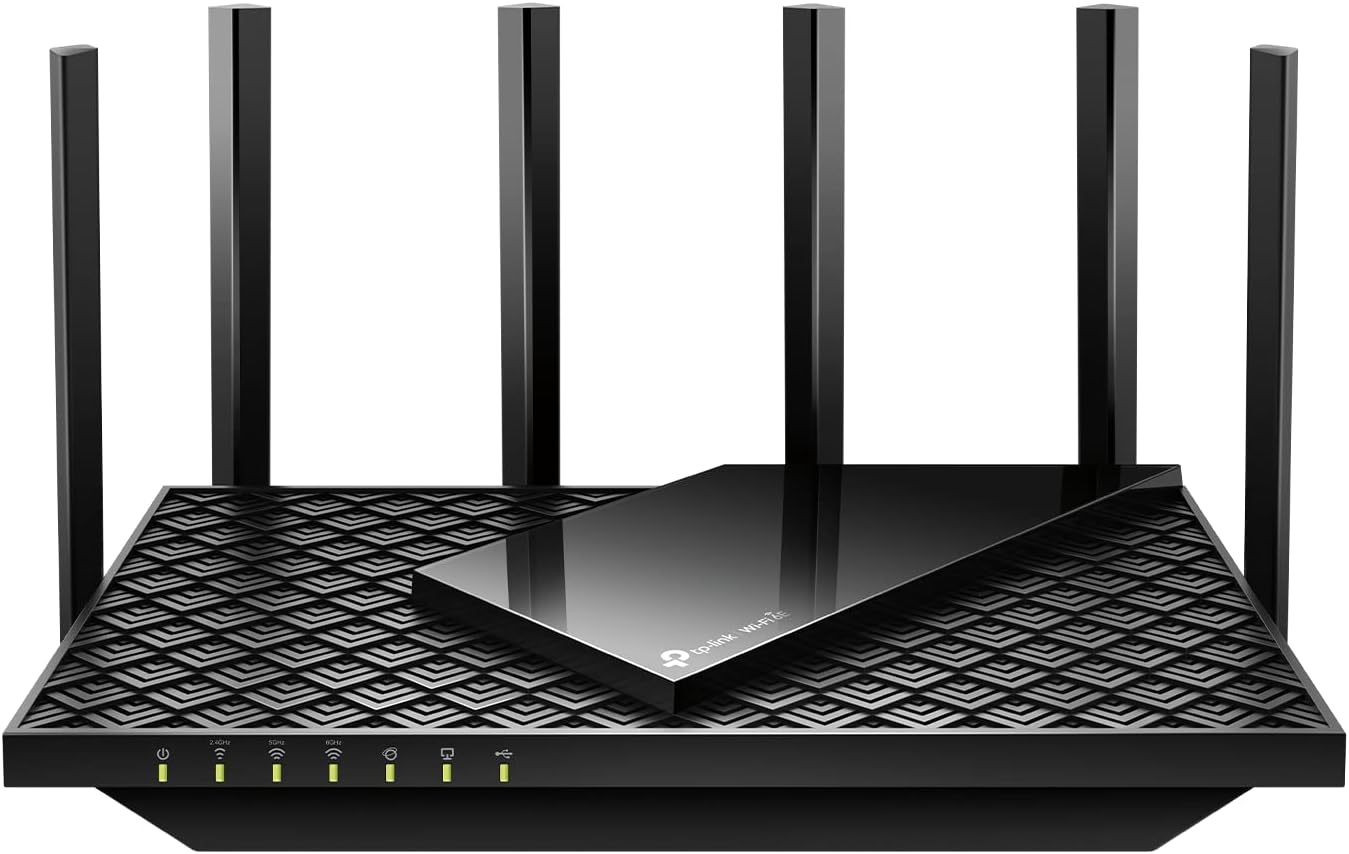
The TP-Link Archer AXE75 is a high-performance tri-band WiFi 6E router designed for modern homes with heavy internet demands. It targets gamers, streamers, and families with multiple connected devices, delivering gigabit speeds and future-proof technology via its pioneering 6GHz band.
Standout features include tri-band WiFi up to 5400 Mbps (2402 Mbps on 6GHz and 5GHz, 574 Mbps on 2.4GHz), OFDMA for four times the device capacity, and a 1.7 GHz quad-core CPU with 512 MB RAM for lag-free handling of 4K/8K streaming, AR/VR gaming, and downloads. The 6GHz band ensures congestion-free performance, while beamforming and six antennas provide strong, reliable coverage. VPN support and HomeShield offer robust security and controls right out of the box.
Build quality is solid with a compact design featuring external antennas for optimal signal direction. Setup is quick through the Tether app, and OneMesh compatibility extends coverage seamlessly. It works with all major ISPs like AT&T and Xfinity, provided you have a modem.
Potential drawbacks include the need for WiFi 6E devices to fully utilize the 6GHz band and subscription fees for premium HomeShield Pro features. Basic protections are free, but power users may want more.
Overall, the Archer AXE75 earns its PCMag Editors' Choice nod as a top WiFi 6E router for superior speed, capacity, and security. Highly recommended for anyone upgrading to next-gen wireless.
WiFi Standards: Tri-Band WiFi 6E (6GHz: 2402 Mbps, 5GHz: 2402 Mbps, 2.4GHz: 574 Mbps)
Processor: 1.7 GHz Quad-Core CPU, 512 MB RAM
Security: WPA3, VPN Server/Client (OpenVPN/PPTP/L2TP), TP-Link HomeShield
Additional Features: OneMesh, Beamforming, 6 High-Gain Antennas, Tether App Setup, QoS, Parental Controls

Pros
- Exceptional WiFi speeds and low latency for gaming
- Top-tier VPN performance with OpenVPN and WireGuard
- High capacity for multiple devices and plugins
- Robust hardware with ample RAM and storage
- Long-range coverage for home and business use
Cons
- Firmware update required on initial setup for optimal performance
- Actual VPN speeds vary by provider and network conditions
- Larger size may not suit very compact spaces
The GL.iNet GL-MT6000, known as Flint 2, is a high-performance WiFi 6 router designed for gamers, streamers, remote workers, and households with many devices. It excels in delivering ultra-low latency connections and supports fiber optic setups with its dual 2.5G Ethernet ports, making it perfect for homes or small businesses needing reliable, high-speed internet.
Standout features include WiFi 6 speeds up to 6Gbps, enabling smooth 4K streaming and multiplayer gaming without interruptions. The quad-core 2.0GHz CPU, 1GB DDR4 RAM, and 8GB storage handle over 100 devices effortlessly. WireGuard VPN reaches 900Mbps, far surpassing competitors, while AdGuard Home integration blocks ads for a cleaner experience. Real-world tests show stable performance even during peak usage.
Build quality is solid with a sturdy plastic chassis measuring 233 x 137 x 53 mm and weighing 761g, featuring multiple antennas for extended range. The web admin panel is intuitive, and setup is straightforward via Ethernet connection or video guides.
Drawbacks include the need for a firmware update right after unboxing to unlock full potential, and VPN speeds can fluctuate based on your ISP or server location. It lacks built-in cellular support, so it's wired-internet focused.
Overall, the Flint 2 is a top choice for demanding users seeking speed, security, and scalability. If you prioritize gaming or multi-device networks, this router delivers exceptional value.
CPU: MediaTek Quad-core @2.0GHz
Memory/Storage: DDR4 1GB / eMMC 8GB
WiFi: 1148Mbps (2.4GHz) + 4804Mbps (5GHz)
Ethernet: 2 x 2.5G Ports + 4 x 1G Ports
VPN: WireGuard up to 900Mbps, OpenVPN up to 190Mbps
Dimensions: 233 x 137 x 53 mm / 761g

Pros
- Exceptional WiFi 7 speeds and efficiency on compatible devices
- Robust security features including HomeShield and WPA3
- Strong coverage for medium-sized homes with up to 90 devices
- User-friendly app-based setup and management
- High-speed wired ports for multi-gig internet
Cons
- Dual-band design limits bandwidth compared to tri-band models
- Full WiFi 7 benefits require newer compatible devices
- Coverage may weaken in very large or obstructed homes
The TP-Link Archer BE400 is a dual-band WiFi 7 router designed for modern households seeking future-proof networking. Ideal for gamers, remote professionals, students, and smart home enthusiasts, it delivers up to 6.5 Gbps total bandwidth across 5GHz and 2.4GHz bands, supporting up to 90 devices over 2,400 sq. ft. of coverage.
Standout features like Multi-Link Operation (MLO), 4K-QAM, and Multi-RU ensure optimized performance for 4K/8K streaming, AR/VR gaming, and fast downloads on WiFi 7 devices such as iPhone 16 Pro or PS5 Pro. Dual 2.5Gbps ports provide wired speeds for high-demand tasks, while HomeShield offers real-time scanning, parental controls, and QoS. In real-world use, it handles heavy multi-device loads with low latency and stable connections, thanks to beamforming and 6 high-performance antennas.
Build quality is solid with compact dimensions of 10.6 x 6 x 1.9 inches and a quad-core CPU for smooth operation. The Tether app makes setup intuitive, and features like EasyMesh, VPN support, and Private IoT network add versatility. Alexa and Google Assistant compatibility enhances smart home integration.
Drawbacks include its dual-band setup, which trails tri-band routers in raw capacity, and reliance on WiFi 7 clients for peak performance. Coverage holds well but may need extenders in larger spaces.
Overall, the Archer BE400 excels as an affordable WiFi 7 entry point, earning its 4.4-star rating for speed, security, and ease of use. Highly recommended for upgrading to next-gen wireless.
WiFi Standards: WiFi 7 BE6500 (5764 Mbps on 5GHz + 688 Mbps on 2.4GHz), 6 streams, 160 MHz channels.
Ports: 1x 2.5Gbps WAN/LAN, 1x 2.5Gbps LAN, 3x 1Gbps LAN, 1x USB 3.0.
Coverage & Capacity: Up to 2,400 sq. ft., 90 devices.
Security & Features: HomeShield, Private IoT, WPA3, VPN Client/Server, EasyMesh, MU-MIMO, OFDMA, Beamforming.
Management: Tether App, Web Interface, Alexa/Google Assistant compatible.
Choose the Archer BE400 if you need WiFi 7 speeds, strong security, and coverage for a medium home without breaking the bank. Opt for tri-band models like BE550 Pro for more devices or larger spaces.
Best for users with multi-gig internet, WiFi 7 gadgets, or IoT setups. Pair with EasyMesh extenders for bigger areas.
Setup is app-based and takes minutes; contact free expert support for help.

Pros
- Exceptional WiFi 7 speeds 1.2x faster than WiFi 6
- Robust coverage and multi-device handling
- High-performance multi-gigabit ports
- Built-in security features
- Easy app-based setup
Cons
- Requires a separate modem for internet connection
- Designed for use in the U.S. only
- Larger footprint may not suit very compact spaces
The NETGEAR Nighthawk BE9300 is a high-performance WiFi 7 tri-band router tailored for gamers, streamers, and busy households needing reliable, future-proof connectivity. It delivers up to 9.3Gbps total speeds across three bands, including the interference-free 6GHz band, making it perfect for 4K/8K video, video calls, and smart home ecosystems supporting up to 100 devices.
Standout features include blazing-fast wireless performance that's 1.2x quicker than WiFi 6, thanks to 320MHz channels, paired with a 2.5Gbps WAN port and dual 2.5Gbps LAN ports for multi-gig wired connections. Real-world use shines in lag-free gaming sessions and smooth multi-device streaming, with high-performance antennas ensuring solid coverage over 2,500 sq. ft.
Design-wise, its sleek body measures 9.8 x 5.9 x 4 inches with a smaller footprint than predecessors, blending functionality and aesthetics. The Nighthawk app streamlines setup and management, while NETGEAR Armor adds robust cybersecurity out of the box.
Drawbacks include the need for a separate modem and U.S.-only compatibility, but these are minor for most users. Overall, the BE9300 earns high marks for delivering next-gen WiFi prowess at an accessible level, making it a top pick for upgrading modern homes.
WiFi Technology: WiFi 7 Tri-Band, up to 9.3Gbps
Coverage: Up to 2,500 sq. ft.
Devices Supported: 100 concurrent
Ports: 1x 2.5G WAN, 2x 2.5G LAN, 2x 1G LAN
Dimensions: 9.8 x 5.9 x 4 inches
Security: NETGEAR Armor (30-day trial)
Pros
- Blazing-fast WiFi 7 with 320MHz channels and Multi-Link Operation for superior throughput
- Powerful quad-core 2.6GHz CPU boosts gaming performance by up to 30%
- ASUS RangeBoost Plus extends coverage up to 25% wider
- Comprehensive security and easy VLAN controls for flexible networking
- ROG First direct boost for ASUS gaming devices
Cons
- Overkill and complex for casual users without WiFi 7 devices
- Large footprint may not suit compact spaces
- Advanced features require some networking knowledge to optimize
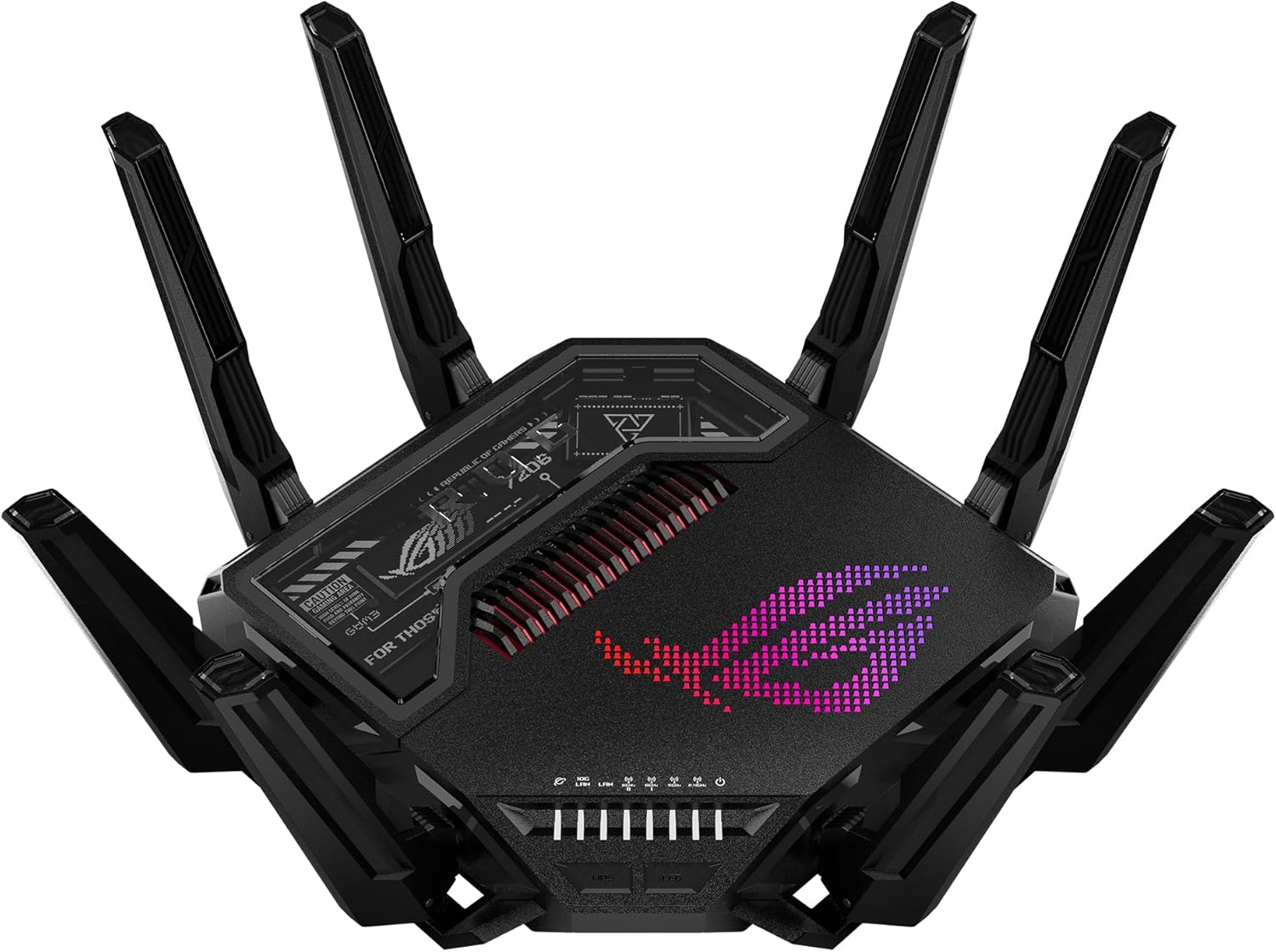
The ASUS ROG Rapture GT-BE98 Pro is a premium quad-band WiFi 7 gaming router designed for enthusiasts, competitive gamers, and homes with high-bandwidth demands like 8K streaming or multi-device setups. It pushes networking limits with up to 30Gbps wireless speeds via dual 6GHz bands and supports next-gen features like 320MHz channels and 4096-QAM modulation.
Standout performance comes from triple-level game acceleration, which prioritizes gaming traffic from your PC to the server, reducing lag and jitter for smoother online play. Dual 10G ports and four 2.5G ports provide 31Gbps wired capacity, ideal for NAS or multi-gig internet. Real-world benefits include stable Multi-Link Operation across bands and ROG First for instant boosts on ASUS gear, making it excel in demanding scenarios.
Build quality shines with a robust chassis, improved airflow for 18% better cooling, and customizable RGB lighting via app or web interface. External dual-feeding antennas and RangeBoost Plus ensure wide coverage. While setup is straightforward through the ASUS app, advanced VLAN and Guest Pro features add flexibility.
Drawbacks include its size and the fact that full potential requires WiFi 7 clients; non-gamers might find it excessive. Overall, this router delivers future-proof performance for gamers willing to invest in top-tier networking.
Verdict: A powerhouse for serious gamers, earning high marks for speed, security, and gaming optimizations.
ROG Exclusive Gaming Network simplifies dedicated SSIDs or ports for triple-level acceleration, covering PC traffic prioritization, jitter prevention, and server boosts.
Mobile Game Mode optimizes handheld gaming, while ROG First creates direct connections for ASUS devices.
Subscription-free security includes AiProtection with Trend Micro databases for 24/7 threat blocking.

Pros
- WiFi 7 delivers superior speed and efficiency over WiFi 6
- Generous coverage area and device capacity for large homes
- Multi-gig port supports fastest internet plans
- Compact, modern design saves space
- Compatible with all ISPs as a versatile router
Cons
- Requires a separate modem for cable or fiber internet
- Dual-band setup may limit performance in ultra-high-density environments
- Lacks built-in modem functionality
The NETGEAR Nighthawk RS90 is a high-performance dual-band WiFi 7 router designed for users seeking future-proof networking. It excels in homes or small offices with multiple devices, offering speeds up to 3.6 Gbps ideal for gaming, video conferencing, and streaming. Gamers and streaming enthusiasts will appreciate its 1.2x speed boost over WiFi 6, ensuring low latency across all connected gadgets.
Standout features include coverage up to 2,000 sq. ft., support for 50 devices, and a 2.5 Gig internet port that maximizes multi-gig ISP plans. In real-world use, it handles bandwidth-intensive tasks smoothly, reducing buffering during peak hours. The router pairs with any ISP but requires a separate modem, making it a flexible upgrade for existing setups.
Design-wise, its sleek body and high-performance antennas minimize footprint while maximizing signal strength. Build quality feels premium, with easy setup aided by free expert support. While dual-band limits it compared to tri-band rivals, the overall performance punches above its class.
Drawbacks include the need for an external modem and no built-in telephony features. Still, for performance-focused buyers, the RS90 delivers exceptional value.
Verdict: A top pick for WiFi 7 newcomers wanting speed and coverage without complexity. Highly recommended for modern households.
WiFi Standard: WiFi 7 (BE3600), Dual-Band
Max Speed: Up to 3.6 Gbps
Coverage: Up to 2,000 sq. ft.
Device Capacity: Up to 50 devices
Ports: 2.5 Gig internet port
Compatibility: Works with any ISP (router only, separate modem required)
Best Routers For Gaming Buying Guide
Wi-Fi Standards and Speeds for Seamless Gaming
Opt for Wi-Fi 6, 6E, or 7 routers to minimize latency and maximize bandwidth in gaming scenarios. Wi-Fi 6E unlocks the 6GHz band for less interference, ideal for crowded networks during peak hours. According to PCMag reviews, these standards deliver consistent 1Gbps+ speeds over distance, perfect for fast-paced shooters like Valorant or large open-world MMOs.
In our hands-on reviews, tri-band setups shone in multi-device homes, prioritizing your gaming rig via QoS settings. Explore PC components to pair with high-speed routers for ultimate rigs.
| Standard | Gaming Benefit |
| Wi-Fi 6 | Low latency, MU-MIMO |
| Wi-Fi 6E/7 | 6GHz band, 320MHz channels |
Gaming Features: QoS, VPN, and Acceleration
Look for Quality of Service (QoS) to prioritize gaming traffic, reducing ping in congested networks. Features like game acceleration, VPN fusion, and mobile game modes, as noted in Tom’s Hardware testing, cut jitter by up to 50% during raids or ranked matches.
Quad-core CPUs handle heavy loads without throttling, ensuring stable connections for streaming overlays or Discord calls. These shine in productivity-gaming hybrids, and check our gaming PCs page for full builds.
Coverage, Ports, and Build Reliability
Multi-gig ports (2.5G/10G) future-proof for fiber internet, supporting high-bandwidth %GPUs% and %SSDs%. Wide coverage up to 2,500 sq. ft. with beamforming prevents dead zones in large homes, per CNET evaluations.
Robust builds with mesh compatibility ensure long-term reliability; we’ve seen these hold up over years of daily use. For expandability, link to our best PC cases.
Final Thoughts
The ASUS ROG Rapture GT-BE98 PRO is our Best Overall for its quad-band WiFi 7, triple acceleration, and 10G ports dominating pro-level gaming. TP-Link Archer AX21 V5 wins Best Value with solid WiFi 6 performance at entry-level pricing. NETGEAR Nighthawk BE9300 excels for large homes needing tri-band coverage. Upgrade now and explore top GPUs next.
FAQs
What makes a router great for Best Routers for Gaming in 2026?
Gamer routers prioritize low latency via QoS, Wi-Fi 6E/7, and dedicated gaming ports. They handle 100+ devices without drops, ensuring fluid 144Hz+ refresh rates in competitive play.
Wi-Fi 6 vs. Wi-Fi 7 for gaming?
Wi-Fi 6 offers excellent value for most, but Wi-Fi 7 doubles speeds and halves latency with 320MHz channels. Dong Knows Tech notes Wi-Fi 7 future-proofs for 8K streaming alongside gaming.
Do I need multi-gig ports?
Yes for fiber over 1Gbps; 2.5G/10G ports unlock full potential. Pair with our picks for lag-free experiences, and grab one today.
How to set up QoS for gaming?
Access the app or web interface, enable gaming mode, and prioritize your console/PC. This cuts ping by 20-30ms in reviews.
Are mesh systems better for gaming?
Mesh extends coverage seamlessly; OneMesh/AiMesh compatible routers avoid wired backhaul needs. See our Computers category for more networking tips and upgrade your setup.
Sources
This article was researched and written with reference to expert reviews and testing data from trusted sources including PCMag, CNET, Tom’s Hardware, Dong Knows Tech, SmallNetBuilder, and other category-relevant publications. All recommendations reflect real-world performance and value as of October 2026.







Write Your Review
No reviews yet. Be the first to share your experience!