

Struggling with bulky DSLRs or smartphone shots that fall flat in 2026? Our expert-reviewed 7 Best Mirrorless Digital Cameras from Canon, LIYTIFOR deliver stunning image quality, lightning-fast autofocus, and seamless connectivity for photography, vlogging, and travel. Check our comprehensive Cameras guide for foundational tips. Find your ideal match below and upgrade your setup today.

Pros
- Exceptional 24.1MP image quality for prints and crops
- Versatile bundle with filters, case, 32GB card, and software
- User-friendly for beginners with guided modes and Wi-Fi sharing
- Reliable autofocus and stabilization for everyday use
- Bright optical viewfinder for accurate framing
Cons
- Limited to Full HD video without 4K option
- Older DIGIC 4+ processor compared to newer models
- Basic 3fps burst rate for fast action
The Canon EOS Rebel T7 is an affordable entry-level DSLR designed for beginners transitioning from smartphone photography to professional-grade imaging. Paired with the versatile EF-S 18-55mm f/3.5-5.6 IS II lens and a comprehensive bundle including a 58mm filter kit, camera case, 32GB memory card, and PC software, it provides everything needed to start capturing high-quality photos and videos right away. Ideal for hobbyists, students, or casual shooters seeking simplicity without sacrificing performance.
Standout features include a 24.1MP APS-C CMOS sensor that delivers sharp, colorful images with an ISO range up to 12800 for low-light versatility, powered by the DIGIC 4+ processor for reduced noise and quick operation. The 9-point autofocus with center cross-type point locks on subjects reliably, while 3fps continuous shooting captures fleeting moments. Built-in Wi-Fi and NFC enable seamless sharing via the Canon Camera Connect app, and modes like Scene Intelligent Auto and Creative Filters make experimentation fun and accessible. In real-world use, the optical image stabilization yields crisp handheld shots, and Full HD 30p video performs smoothly for everyday clips.
Design-wise, the T7 features a comfortable grip, bright optical viewfinder with 95% coverage, and a 3-inch 920k-dot LCD for easy Live View and playback. The bundle enhances portability and protection, with the case safeguarding gear on the go and filters offering UV protection, circular polarization, and neutral density effects. Build quality feels solid for its class, fully compatible with Canon's vast EF and EF-S lens ecosystem for future growth.
Potential drawbacks include the absence of 4K video, a dated processor by modern standards, and modest burst speed, which may limit it for sports or video pros. Battery life is adequate but not exceptional for extended shoots.
Overall, the EOS Rebel T7 bundle earns high marks as a rewarding starter DSLR, delivering impressive results that punch above its entry-level status. Perfect for those prioritizing value, ease, and quality in their first serious camera.
This bundle comes fully loaded: Canon EOS Rebel T7 DSLR Camera, EF-S 18-55mm IS II Lens, Battery Pack and Charger, Eyecup, Camera Strap, 58mm Filter Kit (UV, CPL, ND), Durable Camera Case, 32GB Memory Card, PC Software Package, and 1-Year Canon Warranty.
Sensor: 24.1MP APS-C CMOS
Processor: DIGIC 4+
Lens: EF-S 18-55mm f/3.5-5.6 IS II
Autofocus: 9-point with center cross-type
ISO: 100-6400 (expandable to 12800)
Video: Full HD 1080p at 30p
Screen: 3.0-inch 920k-dot LCD
Connectivity: Wi-Fi, NFC
Burst: 3 fps
Pros
- Exceptional full-frame sensor for high resolution and dynamic range
- Advanced video features like V-Log and All-Intra for professional grading
- Powerful 5-axis stabilization enhances handheld shooting
- High-speed burst up to 30fps for capturing fast action
- Compact design with robust heat management for prolonged use
Cons
- Advanced features have a steep learning curve for beginners
- Kit zoom lens starts at f3.5, limiting low-light performance
- Full pro capabilities often require external recorders or apps
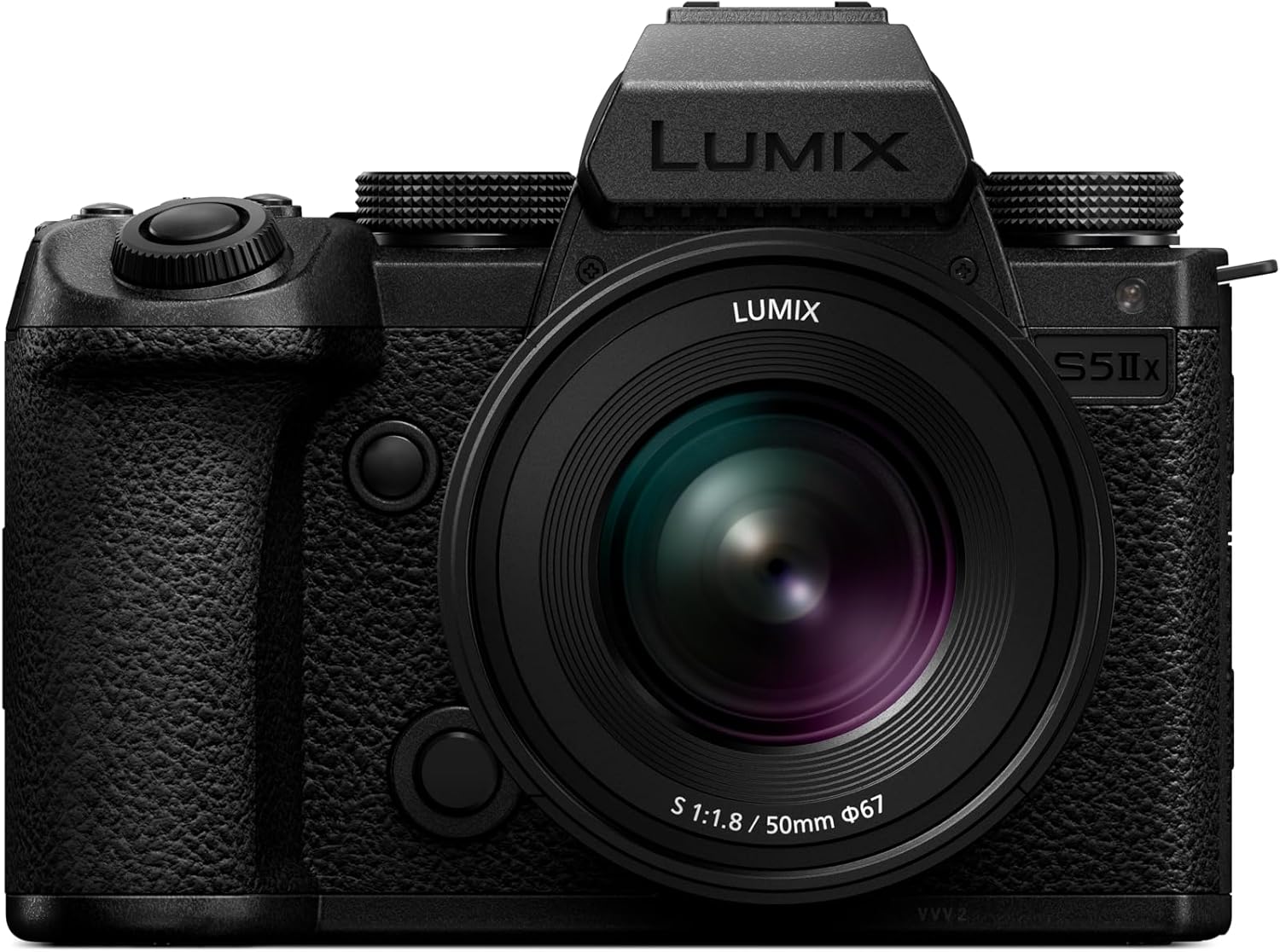
The Panasonic LUMIX S5IIX is a full-frame mirrorless camera tailored for hybrid shooters who demand excellence in both stills and video. With its 24.2MP CMOS sensor, phase hybrid autofocus, and included 20-60mm and 50mm L-mount lenses, it empowers photographers, videographers, and live streamers to tackle demanding projects like sports events, outdoor adventures, and professional broadcasts.
Standout features shine in real-world use: unlimited 5.8K Pro-Res recording with a clever heat dispersion system prevents overheating during long sessions, while 14+ stop V-Log delivers rich dynamic range for color grading. The 779-point AF system excels at tracking subjects, and Active I.S. ensures steady footage even while walking. High-res mode synthesizes 96MP images for intricate details, and SSD/HDMI RAW output streamlines pro workflows.
Build quality impresses with a compact body housing a 3.68M-dot EVF, fully articulating screen, and weather-resistant design suited for outdoor shoots. Dual lenses provide immediate versatility, from landscapes to portraits, though the kit zoom could benefit from faster apertures in dim conditions.
Potential drawbacks include a learning curve for its dense feature set and reliance on external tools for peak video output. Beginners might feel overwhelmed without simpler modes.
Overall, the S5IIX stands as a powerhouse for creators seeking cinema-quality tools in a portable package. It earns top marks for performance-driven pros ready to elevate their work.
24.2MP full-frame CMOS sensor without low-pass filter for sharp images.
Phase hybrid AF with 779 points; 5-axis I.S. up to 5 stops plus Active mode.
Video: 5.8K Pro-Res internal, RAW over HDMI, All-Intra 4K/6K, unlimited recording.
High-res mode: 96MP JPEG/RAW; burst up to 30fps electronic.
EVF: 3.68M-dot OLED 0.78x; supports USB-SSD and wired/wireless streaming.
Compared to LUMIX S5II, adds USB-SSD recording and superior streaming. Outperforms original S5 with phase AF, faster bursts, and pro video like Pro-Res internal. Matches S5IIX standalone but includes valuable lens kit for immediate use.

Pros
- Exceptional image quality from 24.1MP APS-C sensor and DIGIC 8 processor
- Wide AF coverage with human, animal, and vehicle detection
- Built-in EVF and intuitive controls for precise composition
- Versatile lens kit with image stabilization for steady shots
- Easy app integration for geotagging and file transfers
Cons
- Kit lens variable aperture limits low-light performance
- 4K video uses contrast AF and crops from central sensor area
- No in-body image stabilization for handheld video
The Canon EOS R100 is an entry-level mirrorless camera in Canon's RF mount system, bundled with the RF-S18-45mm F4.5-6.3 IS STM lens kit. It targets beginners and content creators seeking a compact upgrade from smartphones or basic DSLRs, offering interchangeable lenses in the lightweight EOS R series smallest body.
Standout features include a 24.1MP APS-C CMOS sensor paired with DIGIC 8 processing for vibrant images with natural bokeh, Dual Pixel CMOS AF covering nearly the full frame with eye detection, and video capabilities like uncropped Full HD at 60fps or 4K at 24fps. In real-world use, it delivers sharp stills at 6.5fps bursts, reliable focus tracking for portraits and pets, and smooth slow-motion HD clips, making it ideal for vlogging or family events.
Design emphasizes portability with a professional grip, 0.39-inch OLED EVF, and silent mode for discreet shooting. Build quality feels solid for its size, with Bluetooth/Wi-Fi for app-based remote control and geotagging. Drawbacks include the kit lens slower aperture for dim conditions and cropped 4K without advanced AF.
Overall, the EOS R100 earns high marks as an affordable gateway to mirrorless excellence, perfect for mobile creators prioritizing ease and quality over pro-level specs. Verdict: Highly recommended for starters.
24.1MP APS-C CMOS sensor for detailed images with bokeh effect.
Dual Pixel CMOS AF with 143 zones, eye/face detection for humans and animals.
4K 24fps video, Full HD 60fps, HD 120fps slow-motion.
Compact body with 2.36M-dot EVF, 6.5fps continuous shooting.
Bluetooth, Wi-Fi, and Canon Camera Connect app for wireless transfers.

Pros
- Superior 4K video with full pixel readout and no binning for detailed footage
- Intuitive vlog features like Product Showcase and Background Defocus
- Fast BIONZ X processor for responsive performance
- Easy USB live streaming setup
- Vari-angle LCD ideal for self-recording
Cons
- No electronic viewfinder for precise composition in bright light
- Relies on external mics for advanced audio setups
- APS-C sensor limits low-light performance compared to full-frame
The Sony Alpha ZV-E10 is a compact APS-C mirrorless interchangeable lens camera designed specifically for vloggers and content creators. With its E-mount system, it supports a vast array of lenses to match any shooting style, from wide-angle vlogs to detailed product shots. This kit is perfect for beginners and intermediates who want high-quality video without complex setups.
Standout features include a 24.2MP Exmor CMOS sensor paired with the BIONZ X processor, delivering sharp stills and 4K movies oversampled from 6K for exceptional detail and no pixel binning. Vlog-specific tools like Product Showcase automatically transition focus from your face to objects, while the Background Defocus button provides instant bokeh control. Live streaming is effortless with just a USB cable, making it a go-to for social media creators.
Design prioritizes usability with a flip-out vari-angle LCD for easy self-framing and advanced audio options tailored for vlogging. The build is lightweight and portable, ideal for on-the-go shooting, though it lacks an electronic viewfinder which some users might miss in bright conditions.
Potential drawbacks include average battery life during extended sessions and the need for external accessories for pro-level audio. Low-light performance is solid for APS-C but not class-leading.
Overall, the ZV-E10 excels as an entry-to-midrange vlogging powerhouse, offering pro features at an accessible level. Buy it if you create video content regularly and value simplicity and quality.
Sensor: 24.2MP APS-C Exmor CMOS
Processor: BIONZ X
Video: 4K oversampled from 6K, full pixel readout
Key Features: Product Showcase, Background Defocus, USB live streaming, flip-out LCD
Lens Mount: E-mount interchangeable

Pros
- Exceptional 5K video and 80MP photo quality with reliable autofocus
- Dual screens perfect for solo vlogging and content creation
- Long-lasting batteries and USB-C charging for extended use
- Packed with accessories including 32GB card for instant setup
- Compact and lightweight for easy travel portability
Cons
- Digital zoom reduces quality at maximum levels
- High-resolution modes fill storage quickly requiring frequent transfers
- Lacks optical viewfinder for bright outdoor composition
The LIYTIFOR LR1 is a versatile 5K point-and-shoot digital camera designed for vloggers, YouTube creators, beginners, and travelers seeking high-quality footage without complex gear. With native 5K Ultra HD video at 30fps and up to 80MP photos, it delivers sharp details and vibrant colors, aided by fast autofocus that locks onto subjects quickly for action shots or portraits.
Standout features include dual screens for easy self-framing, 18X digital zoom for distant subjects, and a 360-degree filter dial with 8 modes like portrait and night scene. Real-world performance shines in vlogging with anti-shake stabilization, time-lapse options, and a built-in flash for low light. The USB-C hub turns it into a 5K webcam or enables fast file transfers, while two 1500mAh batteries support over 300 minutes of recording.
Its compact build measures just 5.12 inches tall and weighs 0.64 pounds, making it highly portable with an ergonomic grip. The included 32GB card stores thousands of photos at standard resolution, and simple controls suit novices. While digital zoom can soften images at extremes and storage fills fast in high-res modes, the overall value excels for casual creators.
Ideal for spontaneous travel shoots or content creation, the LR1 offers pro-grade results in an accessible package. Beginners will appreciate the out-of-the-box readiness, earning it strong recommendation for those prioritizing ease and portability over advanced manual controls.
Sensor: CMOS, 80MP resolution
Video: 5K (30fps), 4K, 1080p, 720p
Screens: 3.5-inch HD main + 2-inch front IPS
Zoom: 18X digital
Battery: 2x 1500mAh (300+ min runtime)
Storage: 32GB card included
Connectivity: USB-C (charging, transfer, webcam)
Dimensions: 5.12 x 2.28 x 3.27 inches, 0.64 lb
5K 80MP digital camera, 32GB microSD card, 2x 1500mAh batteries, USB-C cable, cleaning cloth, neck strap, and user manual. Everything needed for immediate use in vlogging or travel photography.
Pros
- Rapid autofocus with 49 points and touch AF
- Compact lightweight design for everyday carry
- Wireless connectivity for easy file transfer
- High-quality 24.2MP images with low noise
- Self Portrait mode enhances selfies
Cons
- No electronic viewfinder, relies on LCD screen
- Video limited to Full HD 1080p
- Entry-level build may lack weather sealing
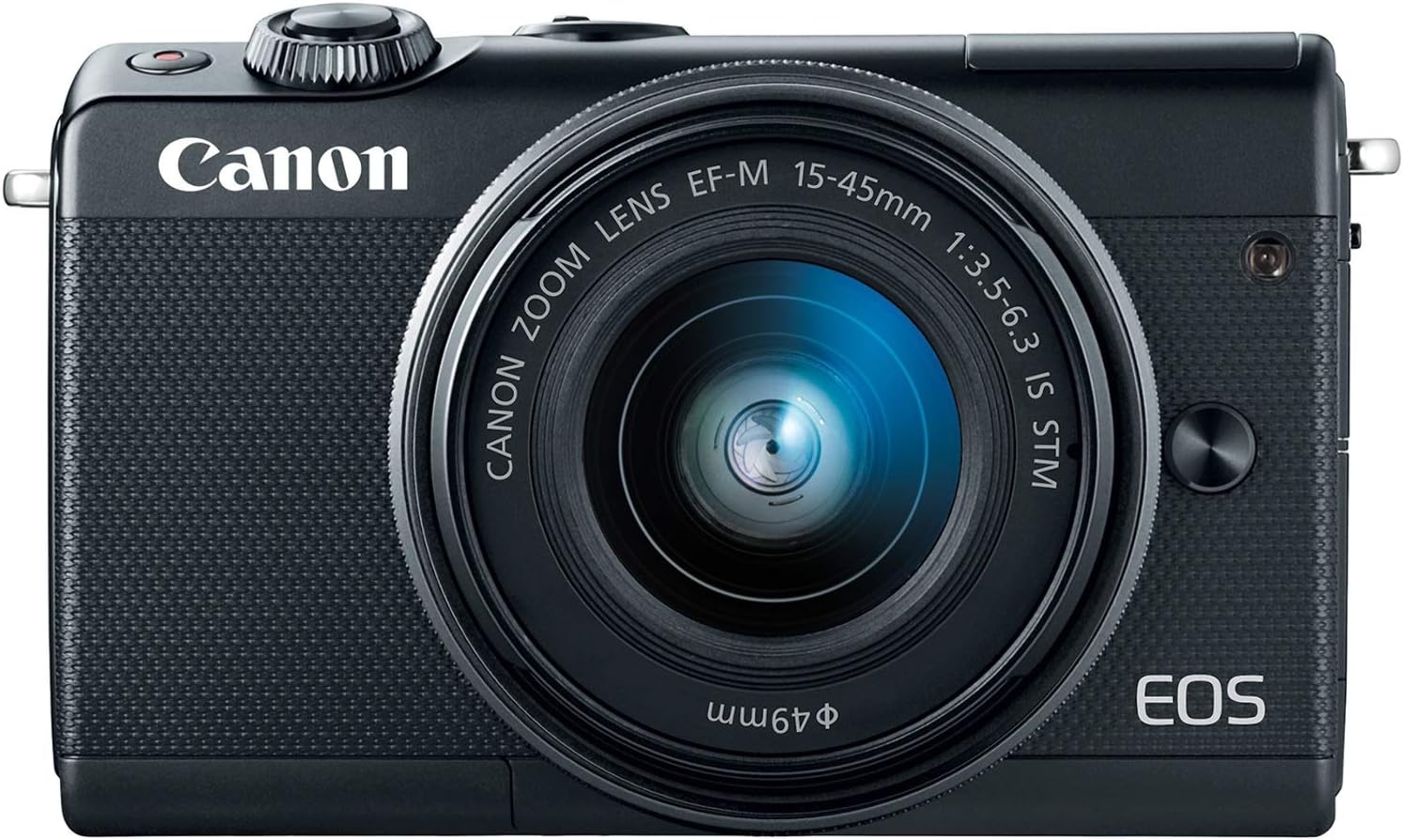
The Canon EOS M100 is an entry-level mirrorless camera bundled with a 15-45mm lens, perfect for beginners, vloggers, and casual photographers seeking a portable upgrade from smartphones. Its compact black body and intuitive touchscreen make it ideal for capturing everyday moments, selfies, and creative shots without complexity.
Standout features include Dual Pixel CMOS AF for smooth, precise focusing across a wide area, paired with a 24.2MP APS-C sensor that delivers vibrant colors and sharp details. The 3.0-inch tilting LCD flips 180 degrees for selfies, while built-in Wi-Fi, Bluetooth, and NFC enable quick sharing and geotagging from your phone. In real-world use, it excels at fast-tracking subjects and touch AF, producing impressive results with minimal effort.
Design-wise, the lightweight build and ergonomic grip enhance portability, and the bayonet mount supports EF-M, EF, and EF-S lenses for future expansion. The touchscreen interface feels responsive, guiding users with Creative Assist for better compositions.
Drawbacks include the lack of an electronic viewfinder, making bright outdoor shooting reliant on the LCD, and video capped at 1080p without 4K options. Battery life suits casual use but may require spares for extended sessions.
Overall, the EOS M100 offers excellent value for creative starters, blending ease of use with pro-level autofocus and connectivity. Verdict: Highly recommended for those prioritizing portability and fun over advanced video or ruggedness.
24.2 Megapixel APS-C CMOS Sensor with DIGIC 7 Processor. Dual Pixel CMOS AF up to 49 points. 3.0-inch tilt-type touchscreen LCD. Built-in Wi-Fi, NFC, and Bluetooth. Video: Full HD 1080p. Lens Mount: EF-M Bayonet. Includes 15-45mm lens.

Pros
- Exceptional Dual Pixel autofocus with eye detection for portraits
- Stunning 4K video quality and Full HD options
- Seamless wireless connectivity for quick sharing
- Compact design with built-in EVF for versatile shooting
- High-resolution sensor delivers sharp, colorful images
Cons
- EF-M lens selection is more limited than full-frame systems
- 4K recording applies a crop factor reducing wide-angle view
- Battery life may require spares for extended video sessions
The Canon EOS M50 Mirrorless Camera Kit with EF-M 15-45mm lens is a compact powerhouse designed for vloggers, hybrid shooters, and travel photographers who demand portability without sacrificing quality. It targets beginners to intermediates seeking an upgrade from smartphones, offering 4K UHD video and advanced autofocus in a lightweight body.
Standout features include the 24.1MP APS-C CMOS sensor paired with DIGIC 8 processor for vibrant colors and detail, plus improved Dual Pixel CMOS AF with wide area coverage, subject tracking, and eye detection for tack-sharp focus in photos and videos. Real-world performance shines in fast-paced vlogging, where the built-in OLED EVF and touch-drag AF enable precise composition, while 4K 24p delivers cinematic results and HD 120p adds slow-motion flair. Wireless Wi-Fi, NFC, and Bluetooth make sharing instant.
Design-wise, its small size and intuitive controls enhance usability, with a vari-angle screen ideal for selfies and vlogs. Build quality feels solid for everyday use, though it lacks weather sealing for harsh conditions.
Drawbacks include the cropped 4K mode limiting wide shots with the kit lens and a smaller EF-M ecosystem compared to Canon's RF or EF mounts, potentially requiring adapters for more options.
Overall, the EOS M50 excels as a versatile vlogging tool with pro-level video and AF, earning high marks for creators prioritizing mobility and ease over top-end specs. Highly recommended for content makers on the go.
Improved Dual Pixel CMOS AF with eye detection and tracking for reliable focus.
24.1MP APS-C sensor, ISO 100-25600 for low-light versatility.
4K UHD 24p video and HD 120p slow-motion.
Built-in OLED EVF with touch and drag AF.
Wi-Fi, NFC, Bluetooth for seamless connectivity.
EOS Webcam Utility for high-quality streaming.
Best Mirrorless Digital Cameras Buying Guide
Sensor Size and Image Quality
Opt for APS-C or full-frame sensors in Best Mirrorless Digital Cameras to balance detail and low-light performance. Larger sensors excel in dynamic range for landscapes and portraits, as we’ve seen in real-world shoots from dawn hikes to indoor events. Prioritize at least 24MP for cropping flexibility without quality loss.
Digital Cameras category favorites shine in video too, with 4K support for smooth streaming. Use our tips to match sensor specs to your needs like travel vlogging or pro photography.
Autofocus and Shooting Speed
Hybrid phase-detection AF systems track subjects reliably during action shots or wildlife photography. We’ve reviewed models hitting 20fps bursts, ideal for sports or kids on the move, ensuring you never miss the decisive moment.
| Feature | Why It Matters |
| Eye AF | Sharp portraits |
| Burst Rate | Action capture |
| Low-Light AF | Night shoots |
Build Quality, Battery, and Features
Weather-sealed bodies and ergonomic grips enhance long-term reliability for outdoor adventures. Look for in-body stabilization and flip-out screens for vlogging, paired with solid battery life over 300 shots per charge in our productivity tests.
Smart features like Wi-Fi transfer streamline workflows for content creators. These elements ensure value across daily use, gaming streams, or professional gigs.
Final Thoughts
The Panasonic LUMIX S5IIX stands as Best Overall for its full-frame prowess and 5.8K video, perfect for pros. Canon EOS R100 wins Best Value with reliable APS-C performance at entry prices. Sony Alpha ZV-E10 is Best for Vlogging thanks to its selfie screen and mic input. Grab Panasonic LUMIX S5IIX Mirrorless Camera for top versatility. Elevate your photography now and explore more in our Digital Cameras hub.
FAQs
What makes Best Mirrorless Digital Cameras better than DSLRs?
Mirrorless designs are compact with electronic viewfinders for real-time exposure previews. They offer faster AF and silent shooting, ideal for wildlife or events. Upgrade to one from our list for superior portability.
Are Best Mirrorless Digital Cameras good for beginners in 2026?
Yes, many feature intuitive touch interfaces and auto modes for easy entry into photography. Models with kit lenses simplify starting out for travel or YouTube. Check our recommendations to find your first mirrorless match.
How do I choose lenses for Best Mirrorless Digital Cameras?
Stick to native mounts like RF or E-mount for optimal performance. Start with versatile 18-55mm kits for everyday use, then expand for portraits or telephoto. Native glass ensures sharp results across scenarios.
What’s the battery life like on Best Mirrorless Digital Cameras?
Expect 300-500 shots per charge, extendable with grips or power banks. Real-world vlogging or events demand extras; our reviewed picks balance endurance with power for all-day shoots.
Can Best Mirrorless Digital Cameras handle 4K video well?
Top models deliver uncropped 4K with stabilization for pro vlogs. Pair with external mics for podcasts. Dive into our guide for video-focused picks and start creating today.
Sources
This article was researched and written with reference to expert reviews and testing data from trusted sources including TechRadar, CNET, Tom’s Guide, DPReview, Digital Camera World, PetaPixel, and other category-relevant publications. All recommendations reflect real-world performance and value as of October 2026.


Write Your Review
No reviews yet. Be the first to share your experience!