

Frustrated by getting lost on unfamiliar routes or struggling with unreliable tracking during long rides? In 2026, the 7 Best Bike GPS from CYCPLUS, GEOID, iGPSPORT stand out for their precise navigation, durable designs, and seamless integration with your cycling setup. We’ve reviewed these devices hands-on to bring you maximum real-world performance, whether you’re commuting, touring, or racing. Check our comprehensive GPS & Navigation guide for more insights. Find your ideal match below and upgrade your setup today.

Pros
- Superior GPS sensitivity for fast, accurate positioning
- Glare-free FSTN screen with tempered glass for durability and readability
- Exceptional battery life outperforms many competitors
- Fully wireless and automatic operation simplifies use
Cons
- Lacks ANT+ sensor support for heart rate or cadence
- No app connectivity for data syncing or advanced analysis
- Manual power-off clears current ride data
The CYCPLUS G1 GPS Bike Computer is a compact, wireless cycling speedometer and odometer designed for riders who want essential ride data without the hassle of cables or complex setups. Ideal for recreational cyclists, commuters, and endurance enthusiasts, it delivers core metrics like speed, distance, time, altitude, and total mileage via reliable GPS positioning.
Standout features include dynamic GPS for quick, accurate tracking and an automatic backlight with FSTN technology for excellent visibility in all lighting conditions. In real-world use, the higher sensitivity ensures faster satellite lock-on compared to basic models, while the 1200mAh battery sustains over 55 hours of riding, perfect for long tours without recharging. Auto sleep after inactivity conserves power and retains data for seamless sessions.
Build quality shines with IPX6 waterproofing for rain-proof reliability and tempered glass that resists scratches. The 2.0-inch screen is straightforward, mounting easily on handlebars without tools, though it prioritizes function over flashy displays.
Drawbacks include no support for external sensors like heart rate monitors and absence of app integration, limiting it for data nerds. Manual shutdown also clears current data, so stick to auto modes.
Overall, the G1 excels as an affordable, no-fuss tracker for cyclists focused on basics done right. If you ride regularly and value longevity and simplicity, this is a solid choice with strong warranty backing.
Screen Size: 2.0 inches
Battery Life: 55+ hours (1200mAh)
Waterproof: IPX6
Sensors: None (GPS only)
Backlight: Automatic
Display Tech: FSTN with tempered glass
Sleep Mode: Auto after 10 minutes

Pros
- Simple out-of-box setup with ready-to-use profiles
- Turn-by-turn navigation tailored to cycling routes
- Robust safety features including incident detection
- Seamless eBike compatibility for real-time guidance
- Versatile sensor support for personalized metrics
Cons
- Some features like incident detection require smartphone pairing and network coverage
- Heart rate and speed sensors sold separately
- Limited to outdoor rides for full GroupTrack functionality
The Garmin Edge Explore 2 is a dedicated GPS cycling computer designed for riders who want reliable navigation without complexity. It targets casual cyclists, eBike enthusiasts, and adventurers exploring new roads or trails, offering preloaded maps and simple setup right out of the box.
Standout features include bike-specific turn-by-turn directions, high-contrast maps that flag popular routes and busy areas, and eBike integration for battery and range alerts. In real-world use, the 3-inch touchscreen performs well in sunlight and rain, while safety tools like incident detection and Assistance provide peace of mind during outdoor rides. Paired with a smartphone, it enables LiveTrack, notifications, and messaging for group rides.
Build quality shines with a durable, glove-friendly display and compatibility for sensors and Varia awareness devices, enhancing metrics like heart rate or rearview alerts. It tracks essential ride data accurately and supports indoor music control, making it versatile for training too.
Drawbacks include reliance on a smartphone for advanced safety and connectivity features, plus separate purchases for sensors. It's not ideal for those needing advanced training analytics.
Overall, the Edge Explore 2 delivers confident, local-like riding for beginners and explorers, earning strong recommendation for its ease and eBike focus.
Pros
- Exceptional navigation accuracy even under tree cover or in cities
- Powerful training insights including daily workouts and missed prompts
- Long battery life supports demanding multi-day rides
- Reliable button controls work in wet, muddy, or gloved conditions
- Versatile for road, gravel, trail, and indoor cycling
Cons
- Many advanced features require compatible power meter and heart rate monitor
- Button-only interface lacks touchscreen convenience
- Initial setup benefits from paired sensors for full potential
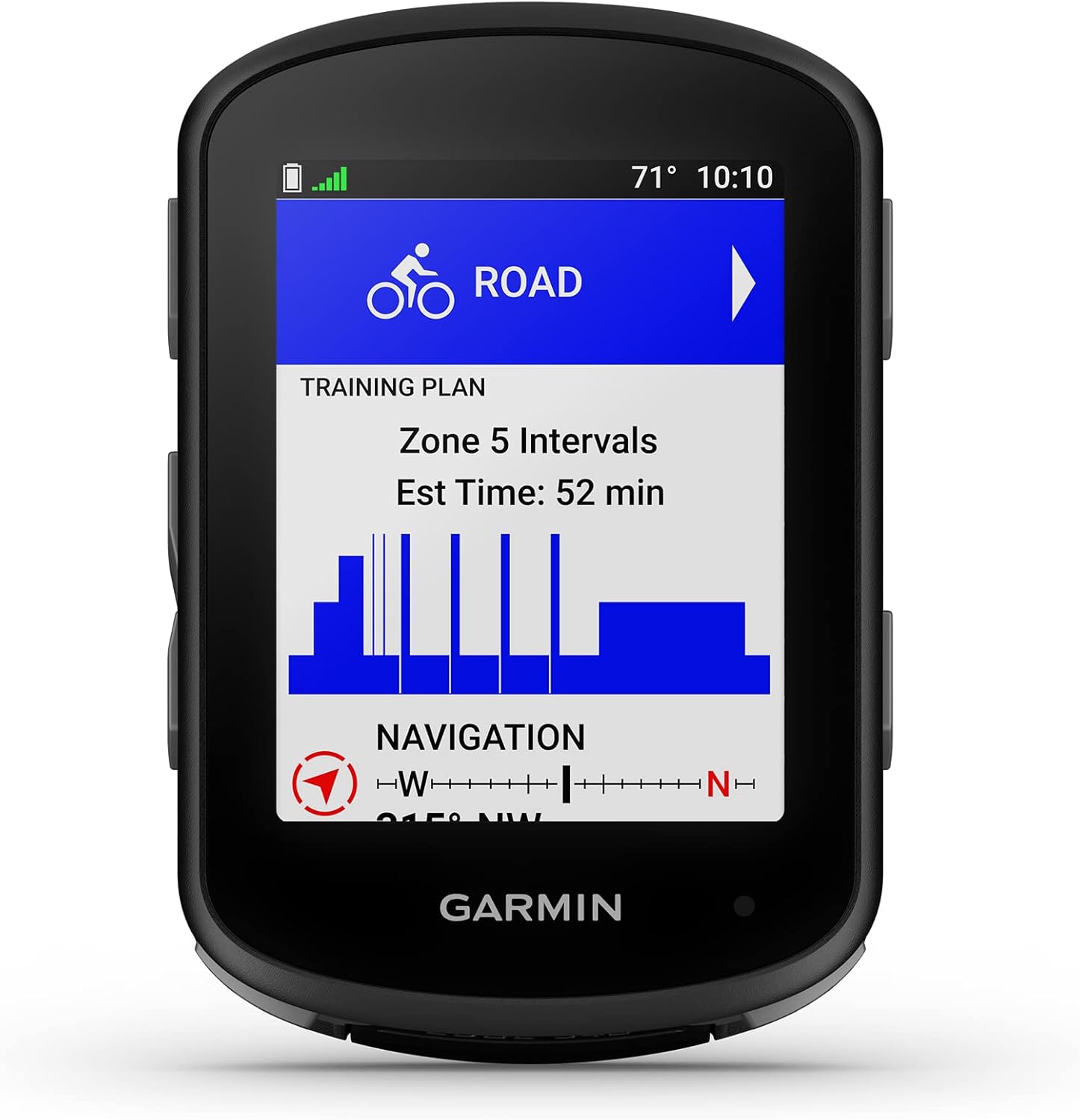
The Garmin Edge 540 is a compact, button-controlled GPS cycling computer designed for dedicated riders who want to elevate their training. It targets cyclists using power meters and heart rate monitors, offering adaptive coaching that personalizes workouts based on current load and recovery, making it perfect for race prep or personal goals across roads, trails, gravel, or indoor sessions.
Standout features like multi-band GNSS deliver pinpoint accuracy in tough spots like urban canyons or thick tree cover, while ClimbPro provides real-time ascent data on any ride. Stamina insights and power guides help you gauge remaining effort, and daily suggested workouts keep you on track. In real-world use, these tools translate to focused improvements by classifying your strengths against course demands.
Build quality shines with durable buttons that perform in all weather, and a battery lasting up to 26 hours in heavy use or 42 in saver mode ensures reliability. Ride-specific maps and smart connectivity add practical value for exploring new routes safely.
Potential drawbacks include reliance on compatible sensors for peak functionality and a learning curve with button navigation over touchscreens. Still, these are minor for its core audience.
Overall, the Edge 540 earns top marks for serious cyclists seeking data-driven progress. If you train with metrics, it will transform how you ride and recover.
Advanced navigation with multi-band GNSS for superior positioning.
Targeted coaching adapts to your power meter and heart rate data.
ClimbPro and stamina insights optimize every ride.
Button controls built for all conditions; up to 42-hour battery.
Training prompts and improved maps for diverse cycling types.

Pros
- Vibrant 2.4-inch color screen with intuitive buttons for easy viewing on the go
- Supports up to 4 routes and 300km lengths with 24-hour battery life
- IPX7 waterproof rating handles rain and splashes reliably
- Multilingual support in 11 languages for global users
- Automatic backlight and time calibration enhance usability
Cons
- Lacks built-in maps or street views, relying solely on uploaded GPX files
- Navigation may miss fork details on some roads due to map data limitations
- Requires manual wheel circumference setup for accurate speed sensor readings
The GEOID CC600 is a versatile wireless cycling computer designed for road and indoor cyclists who want essential GPS tracking without premium pricing. It targets hobbyists and enthusiasts needing route navigation, sensor integration, and data analysis tools in a compact package.
Standout features include lightning-fast 5-second GPS acquisition via GPS, Beidou, Glonass, and more, plus colorful route guidance with pop-up turn alerts and auto-rerouting. Real-world performance shines in quick syncing over WiFi, customizable data displays with charts and dials, and seamless connections to ANT+ and Bluetooth sensors like power meters and heart rate straps. Indoor training mode lets users set power zones for structured workouts.
Build quality impresses with a durable Asahi glass screen, IPX7 waterproofing, and a simple three-button interface on its 2.4-inch color display. Battery lasts up to 24 hours, storing extensive ride data for later export to apps like Strava.
Drawbacks include no native map visualization or official Komoot integration, requiring GPX imports, and occasional gaps in navigation details at road forks. Sensor accuracy needs manual wheel calibration.
Overall, the CC600 delivers strong value for cyclists prioritizing navigation and training features, earning solid praise for its affordability and functionality. Recommended for riders upgrading from basic odometers.
Display: 2.4-inch color screen with Asahi glass.
GPS: 5-second positioning with GPS, BEIDOU, GLONASS, QZSS, GALILEO, and AGNSS support.
Connectivity: WiFi, Bluetooth, ANT+; pairs with up to 9 sensor types.
Battery: 24 hours runtime.
Navigation: GPX routes up to 300km, stores 4 routes, auto-reroute.
Other: IPX7 waterproof, 11 languages, free indoor training, FIT export.
Works with Bluetooth and ANT+ sensors including heart rate monitors, speed/cadence sensors, power meters, and smart trainers. Export FIT files to Strava, TrainingPeaks. Use GPX from apps like Komoot via manual import/export workflow. App handles settings, firmware, and data sync.
Global interface supports metric/imperial units, time, and temperature adjustments.

Pros
- Vivid touchscreen and buttons for easy use in all conditions
- Advanced training plans that adapt to your performance
- Superior GPS accuracy for technical terrain
- Built-in speaker for audio alerts and bell
- Compact design with extensive connectivity features
Cons
- Full smart features require compatible power meter and heart rate monitor
- Battery lasts only 12 hours in demanding use
- Some alerts and hazard reports need smartphone and app
The Garmin Edge 850 is a premium GPS cycling computer designed for dedicated road, gravel, and trail riders who demand precise navigation, adaptive training, and real-time performance data. Its compact form factor with vivid color touchscreen and physical buttons ensures reliable control even with gloves or in wet conditions, making it ideal for enthusiasts pushing their limits.
Standout features include smart fueling alerts that factor in your fitness level, terrain demands, heat, and humidity when paired with a power meter and heart rate monitor, helping prevent bonks mid-ride. Preloaded maps with Trailforks integration and multi-band GPS deliver spot-on positioning for descents and technical sections, while weather overlays, hazard alerts from the community, and group ride tools via the Garmin Connect app enhance safety and fun.
Build quality shines with a sleek, durable design and up to 36 hours of battery life in saver mode, plus a built-in speaker for navigation prompts and a bike bell to alert others. Contactless Garmin Pay simplifies stops, though maximum benefits require compatible accessories and a smartphone.
Potential drawbacks include dependency on external sensors for advanced metrics and shorter 12-hour battery in intensive use, but these are minor for its target audience.
Overall, the Edge 850 earns top marks for transforming rides with pro-level insights; buy it if you are serious about cycling training and exploration.
Battery Life: Up to 12 hours demanding use, 36 hours saver mode.
Display: Vivid color touchscreen with button controls.
GPS: Multi-band with 5 Hz recording.
Maps: Preloaded road, gravel, trails; Trailforks with Forksight.
Connectivity: Smartphone app for weather, hazards, group rides; Garmin Pay; built-in speaker.

Pros
- Long 25-hour battery life for extended cycling sessions
- Broad sensor compatibility including heart rate, cadence, and power meters
- IPX7 waterproofing handles rain and splashes reliably
- Stores 400 hours of data for detailed post-ride analysis
- Multiple languages and customizable UI for global users
Cons
- Lacks climb function and e-bike mode found in higher models
- Button-only interface without touchscreen may feel less intuitive
- No onboard map navigation, relies on pre-loaded routes
The iGPSPORT BSC200S is a compact GPS bike computer designed for cyclists who prioritize navigation and data tracking on the go. Ideal for road and mountain bikers using apps like Strava or Komoot, it imports routes wirelessly and guides you with turn-by-turn directions, making it a solid choice for adventure seekers without needing a smartphone mount.
Standout features include one-touch navigation to saved locations, yaw reminders, and the ability to continue interrupted rides seamlessly. The 2.4-inch semi-reflective color screen shines in direct sunlight, displaying over 100 metrics like speed, cadence, and FTP. Real-world performance excels with 25-hour battery life, ANT+ and Bluetooth connectivity to sensors and lights, plus smart notifications that keep you informed without distraction.
Build quality impresses with its lightweight 66g frame, IPX7 waterproofing, and sturdy mount. The six-button layout is responsive, though it lacks the swipe ease of touchscreens. Type-C charging is a modern touch, fully powering up in 1.5 hours.
Drawbacks include no dedicated climb tracking or e-bike support, and route navigation depends on app planning rather than full maps. Still, for the features, it delivers exceptional value.
Verdict: A top pick for navigation-focused cyclists wanting long battery and app integration without complexity. Highly recommended for daily commuters and tourers.
Screen: 2.4-inch colorful semi-reflective
Dimensions: 82 x 53 x 14.1 mm, 66g
Battery: 25 hours, 600mAh, Type-C charging (1.5 hours full)
Waterproof: IPX7
Connectivity: Bluetooth, ANT+, compatible with speed/cadence/HR sensors, power meters, iGPSPORT lights/radar
Storage: 400 hours of data
Navigation: Route import, one-touch, back-to-start
Languages: English, Spanish, Portuguese, French, German, Italian, and more
Pros
- Large 2.8-inch color touchscreen for clear visibility and quick operation
- Advanced map navigation with zoom, dual views, and 1000km route support
- Fast WiFi/Bluetooth sync and ANT+ compatibility for broad device integration
- Up to 25-hour battery life for extended adventures
- Supports 11 languages and global offline maps via 4GB storage
Cons
- Rerouting feature requires constant app connection
- Optimal GPS performance needs open areas and recent AGNSS sync
- 104g weight may feel noticeable on ultralight setups
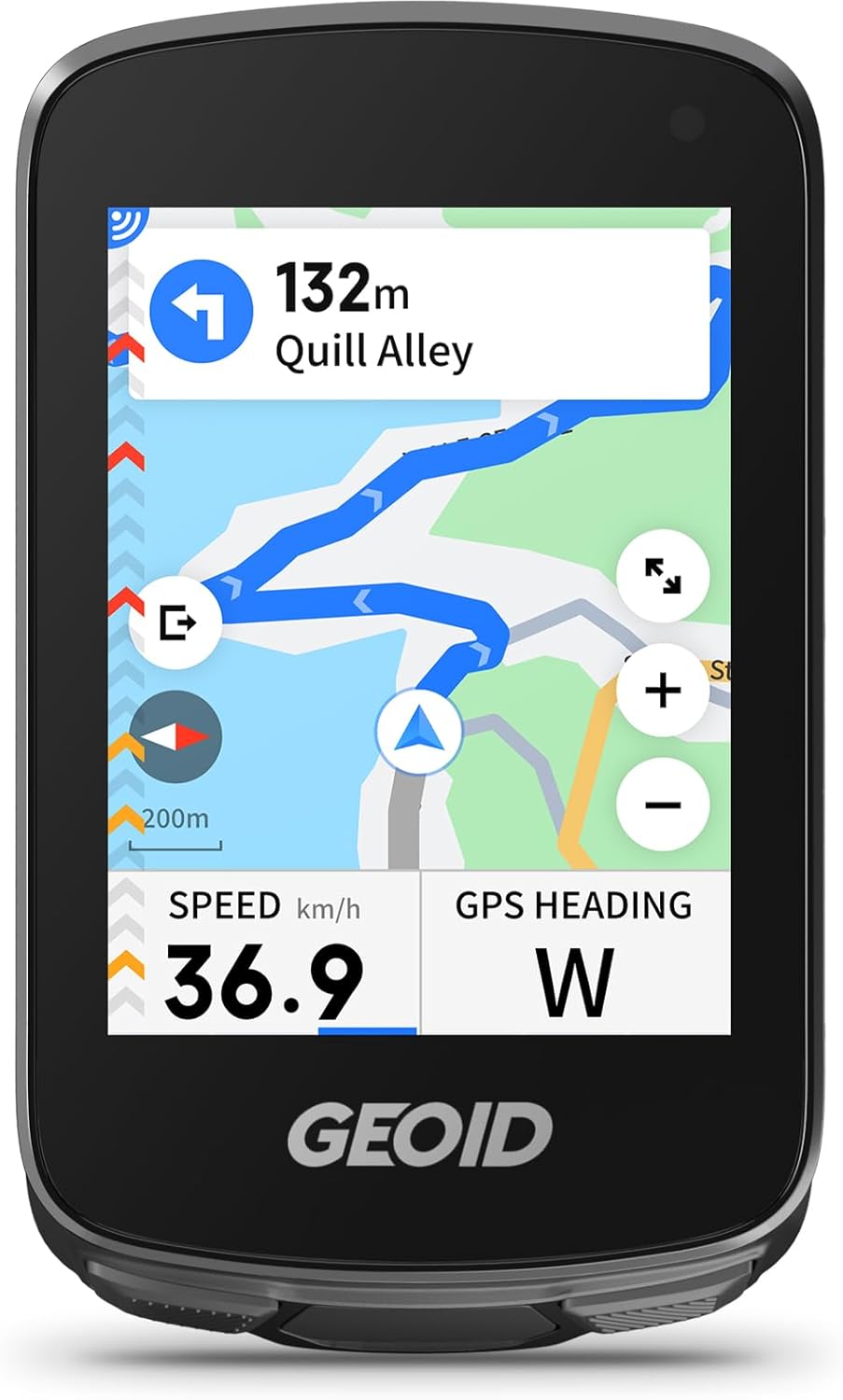
The GEOID CC700 Pro is a advanced GPS cycling computer designed for cyclists who demand precise navigation and data tracking on both road and trail adventures. With its 2.8-inch color touchscreen, it delivers clear maps, turn-by-turn guidance, and street name displays, making it ideal for explorers tackling unfamiliar routes up to 1000km long.
Standout features include 5-satellite GNSS for 5-second positioning, smart rerouting to handle detours seamlessly, and WiFi auto-sync for quick data transfers to apps like Strava. Indoor training support lets users simulate rides with power targets and gradients, while ANT+ and Bluetooth ensure compatibility with sensors, phones, and even DJI Action cameras for mode switching and recording.
Build quality shines with IPX7 waterproofing, a removable mount, and a battery lasting 15-25 hours, all in a 104g package. The touchscreen pairs with buttons for glove-friendly use, and 4GB storage holds multiple offline maps for global travel.
Potential drawbacks include app dependency for rerouting and best performance in open skies, plus its weight might not suit minimalists. Still, the feature set punches above its class.
Overall, the CC700 Pro offers exceptional value for tech-savvy cyclists seeking pro-level navigation without complexity, earning high marks for innovation and ride-enhancing tools.
Screen: 2.8-inch color touchscreen
Navigation: Map with reroute, turn alerts, street names, zoom
GPS: GPS/BEIDOU/GLONASS/QZSS/GALILEO, 5-second positioning
Battery: 15-25 hours
Connectivity: WiFi, ANT+, Bluetooth
Storage: 4GB maps/routes
Other: IPX7 waterproof, 104g, 11 languages, indoor training
Compared to GEOID CC600/CC700 siblings, the CC700 Pro upgrades to touchscreen and map navigation from basic route guidance. It matches their 15-25h battery but adds 4GB storage and DJI integration, positioning it as the premium choice for detailed mapping needs.
Best Bike GPS Buying Guide
Navigation Accuracy and Mapping
The cornerstone of any great bike GPS is reliable navigation. Look for devices with fast GPS lock-on, turn-by-turn directions, and rerouting capabilities to handle detours seamlessly. In real-world scenarios like urban commuting or off-road trails, these features keep you on course, reducing stress and boosting safety.
Advanced mapping from preloaded topo or road data shines during long tours. According to DC Rainmaker reviews, units with multi-band GPS offer superior accuracy in challenging environments like dense forests or cities. Prioritize those with offline map support for remote adventures.
Battery Life and Durability
Battery endurance is crucial for all-day rides without constant recharging. Top Best Bike GPS deliver 15+ hours of runtime, even with screens on and sensors connected. We’ve reviewed models that hold up through rain, mud, and vibrations, thanks to IPX7 waterproofing and robust mounts.
| Feature | Key Consideration |
| Battery | 15-25 hours GPS mode |
| Waterproofing | IPX7 or higher |
| Mount | Secure quarter-turn |
Connectivity and Smart Features
ANT+ and Bluetooth connectivity pair effortlessly with heart rate monitors, cadence sensors, and eBikes. Smart notifications and auto-sync to apps like Strava enhance your training. For productivity on the go, explore our Car Electronics section for complementary tech. Choose based on your ecosystem for frictionless data sharing.
Final Thoughts
The Garmin Edge 540 earns Best Overall for its adaptive coaching and precise navigation, perfect for serious cyclists seeking performance insights. For unbeatable value, the CYCPLUS GPS Bike Computer offers pro-level data at entry-level demands. Bike enthusiasts on a budget love the GEOID CC600 for fast positioning and free training modes. Grab the Garmin Edge 540 to transform your rides. Head to our GPS & Navigation hub for more recommendations and hit the road confidently.
FAQs
What should I prioritize in 2026 Best Bike GPS?
Focus on GPS accuracy, battery life over 15 hours, and sensor compatibility for your riding style. Rugged builds ensure reliability across commuting, racing, or touring. Our picks balance these for everyday use.
Which Best Bike GPS is best for long-distance touring?
Models with extended battery and offline maps, like premium Garmin units, excel here. They handle rerouting and provide safety features for remote routes. Upgrade today for peace of mind on epic journeys.
Do Best Bike GPS work with eBikes?
Yes, many support eBike integration via ANT+ for assist level monitoring and range estimation. Check compatibility with your motor system for seamless connectivity.
How accurate are Best Bike GPS for speed and distance?
BikeRadar testing shows top devices within 1-2% accuracy using multi-GNSS. Pairing with wheel sensors boosts precision further in varied terrain.
Are Best Bike GPS easy for beginners?
Entry-level options feature intuitive interfaces and auto-backlights. Start simple and explore advanced training as you progress. Find your match in our list above.
Sources
This article was researched and written with reference to expert reviews and testing data from trusted sources including DC Rainmaker, BikeRadar, Cycling Weekly, Road.cc, and other category-relevant publications. All recommendations reflect real-world performance and value as of October 2026.


Write Your Review
No reviews yet. Be the first to share your experience!