

Frustrated by slow renders and stuttering previews that derail your photo editing workflow? In 2026, our handpicked 7 Best Cpus For Photo Editing power through demanding tasks like batch processing in Lightroom or intricate retouching in Photoshop with unmatched efficiency. These selections from top builders shine in real-world performance, balancing raw power with reliability for professionals and enthusiasts. Dive into our PC Components category for broader insights. Find your ideal match below and upgrade your setup today.

Pros
- Exceptional multi-threaded performance for video editing and 3D tasks
- Pro-grade GPU stability with ECC memory and multiple display support
- Ample fast storage and RAM for large projects
- Comprehensive USB and display connectivity
- Effective thermal management for sustained loads
Cons
- High power draw from premium components requires stable PSU
- Tower design demands ample desk space
- Specialized for pro workflows, overkill for casual use
The CPU Solutions Express workstation is a powerhouse desktop built for professional video editors, 3D modelers, and content creators tackling 4K to 8K footage. Powered by the 15th Gen Intel Core Ultra 9 with 24 cores boosting up to 5.7GHz, 64GB RAM, and a 2TB NVMe SSD, it delivers the muscle needed for demanding applications like multi-cam editing and complex renders.
Standout features include the NVIDIA Quadro RTX 2000 Ada GPU with 16GB ECC memory, 2,816 CUDA cores, and support for up to four 8K displays, ensuring smooth performance in Adobe Premiere Pro, After Effects, DaVinci Resolve, and Blender. Real-world benefits shine in accelerated rendering times and stable playback during intensive edits, thanks to high core counts and software optimizations.
Design emphasizes build quality with a mesh case for optimal airflow, a Bronze 650W PSU, and extensive ports including USB 3.2 Gen 2 Type-A/C, USB 3.0/2.0, and dual Mini DisplayPorts. This setup promotes reliable operation under heavy loads without thermal throttling.
Potential drawbacks include its power-hungry nature, which suits dedicated setups but not laptops, and the tower's size requiring dedicated space. It excels in pro environments but may overwhelm lighter tasks.
Overall, this workstation earns top marks for creators needing uncompromised speed and stability. If 4K/8K editing or 3D work defines your workflow, it provides exceptional value through performance and expandability.
Processor: 15th Gen Intel Core Ultra 9, 24 cores up to 5.7GHz
Graphics: NVIDIA Quadro RTX 2000 Ada, 16GB ECC GDDR6
Memory: 64GB RAM
Storage: 2TB NVMe M.2 SSD (up to 5.0GB/s read)
OS: Windows 11 Pro (bloatware-free)
Connectivity: 4x USB 3.2 Gen 2, 2x USB 3.0, 2x USB 2.0, dual Mini DisplayPort (up to 4x 8K displays)
Power & Cooling: 650W Bronze PSU, mesh case airflow
Pros
- Powerful i9 processor outperforms many i7/i5 rivals for intensive tasks
- Generous expandable RAM/SSD for future-proof storage needs
- Triple 4K display support boosts workflow efficiency
- Fast WiFi 6 and wired Ethernet ensure reliable connectivity
- Compact design fits anywhere without sacrificing power
Cons
- Integrated graphics limit high-end gaming performance
- High-performance CPU may generate noticeable heat under heavy loads
- No reviews yet, so real-world reliability unproven
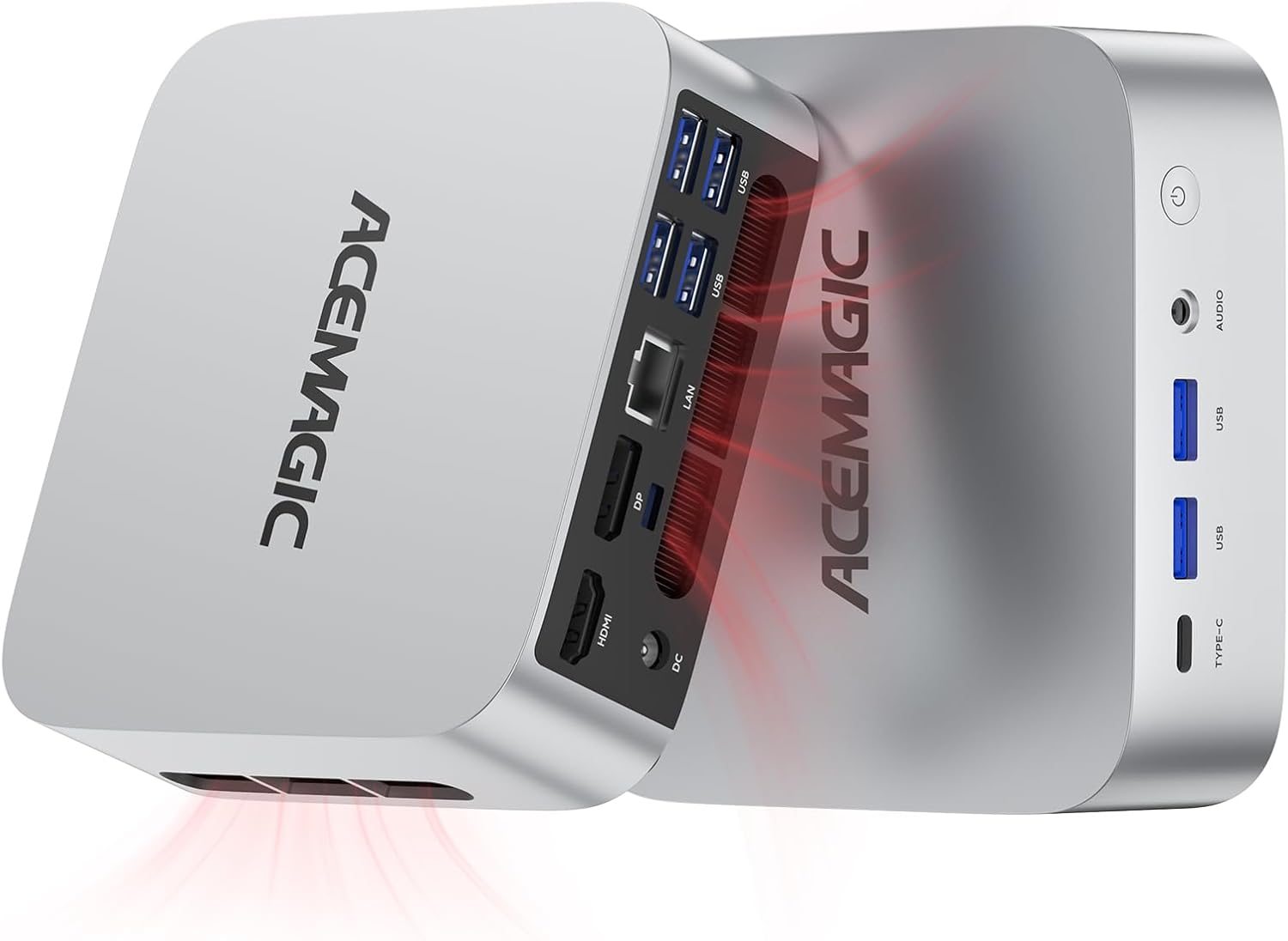
The ACEMAGIC M1 Mini PC is a palm-sized powerhouse designed for professionals needing high performance in compact spaces, such as home offices, mobile workstations, photo/video editors, 3D modelers, and data analysts. Equipped with an Intel Core i9-11900H (8 cores/16 threads, up to 4.9GHz), 32GB DDR4 RAM, and 1TB SSD, it delivers smooth operation for resource-heavy tasks far surpassing typical i5 or i7 minis.
Standout features include triple 4K display outputs via HDMI 2.0, DP 1.4, and Type-C, enabling multi-monitor setups for enhanced productivity. Intel UHD Graphics handles ultra-realistic visuals at 60Hz, while WiFi 6, Bluetooth 5.2, and 2.5G Ethernet provide seamless connectivity. Abundant ports like 10Gbps USB-C and multiple USB-A make it versatile for peripherals, and expandable storage up to 4TB supports growing needs. In real-world use, it excels at quick app launches, buffer-free 4K streaming, and efficient file handling.
Build quality shines with a sturdy chassis, silent high-speed fan, dual copper cooling tubes, and optimized airflow for sustained performance without throttling. It's plug-and-play ready, compatible with Windows, Ubuntu, and Linux, and connects effortlessly to wireless devices like keyboards or monitors.
Potential drawbacks include reliance on integrated graphics, which may not suit hardcore gamers, and possible warmth during prolonged intensive use despite cooling. No customer reviews are available yet to confirm long-term durability.
Overall, the ACEMAGIC M1 earns high marks as a top-tier mini PC for power users prioritizing portability and performance. If you need a reliable, expandable desktop alternative for work or creative projects, this is a strong contender backed by a 3-year warranty.
Processor: Intel Core i9-11900H (8C/16T, up to 4.9GHz, 24M Cache)
Memory: 32GB DDR4 (dual-channel, expandable to 64GB)
Storage: 1TB M.2 2280 SSD (expandable via additional PCIe 3.0 slot up to 4TB)
Graphics: Intel UHD Graphics (350MHz base, 1.45GHz max)
Ports: HDMI 2.0, DP 1.4, Type-C (10Gbps data/DP), 2x USB-A 10Gbps front, 4x USB-A 5Gbps rear, 2.5G RJ45 LAN, 3.5mm audio, DC IN
Connectivity: WiFi 6, Bluetooth 5.2
Display: Triple 4K@60Hz support
Other: Supports Windows, Ubuntu, Linux; FCC/CE/ROHS certified; 3-year warranty

Pros
- Top-tier i9-14900K processor delivers unmatched speed
- Ample 32GB DDR5 RAM and 2TB SSD for future-proof performance
- Extensive front and rear ports for easy connectivity
- Wi-Fi 6E ensures fast, reliable wireless
- Windows 11 Pro optimized for productivity
Cons
- Integrated graphics limit high-end gaming without upgrades
- Tower design requires ample desk space
- High-performance components increase power consumption
The Dell XPS 8960 is a powerhouse tower desktop designed for professionals, gamers, and creators who demand top performance. Equipped with Intel's 14th Gen Core i9-14900K processor, 32GB DDR5 RAM, and a 2TB SSD, it handles intensive tasks like video editing, 3D rendering, and multitasking with ease. Ideal for business users needing reliable speed without compromise.
Standout features include the i9-14900K's turbo boost to 6.00GHz, delivering real-world performance that powers through demanding applications smoothly. The DDR5 RAM ensures seamless operation across multiple programs, while the SSD offers quick load times and vast storage. Connectivity shines with Wi-Fi 6E, Bluetooth, and a full suite of USB ports, including Type-C with PowerShare, supporting modern peripherals and multi-monitor setups.
Build quality reflects Dell's premium standards, with a robust chassis featuring front and rear ports for accessibility, Kensington lock for security, and versatile audio options. While the tower form factor is spacious and well-ventilated, it may not suit compact desks.
Potential drawbacks include reliance on integrated graphics, which may require a GPU add-on for 4K gaming, and higher power draw from its extreme specs. Overall, the XPS 8960 earns high marks for delivering flagship performance in a professional package.
Verdict: A top choice for power users seeking blistering speed and expandability in a reliable Dell desktop.
Processor: Intel Core i9-14900K (3.20GHz base, turbo to 6.00GHz, 24 cores)
Memory: 32GB DDR5 RAM
Storage: 2TB M.2 SSD
Connectivity: Intel Wi-Fi 6E AX1675, Bluetooth, RJ-45 Ethernet
Ports (Front): 2x USB 3.2 Gen 1 Type-A, USB 3.2 Gen 1 Type-A with PowerShare, USB 3.2 Gen 2 Type-C with PowerShare, SD-card slot, headset jack
Ports (Rear): 2x USB 3.2 Type-A Gen 1, USB 3.2 Type-C Gen 2x2, 2x USB 2.0, 7.1 audio, DisplayPort 1.4
OS: Windows 11 Pro

Pros
- Powerful i9-14900K processor excels in demanding tasks
- Generous 64GB DDR5 RAM for future-proof multitasking
- Spacious 4TB SSD for extensive data storage
- Comprehensive port selection for easy connectivity
- Latest Wi-Fi 6E for high-speed wireless performance
Cons
- Integrated graphics may limit extreme gaming without upgrades
- High-power CPU could increase electricity costs
- Tower size may not suit small desk spaces
The Dell XPS 8960 is a premium desktop tower designed for power users, professionals, and gamers who demand top-tier performance. Equipped with Intel's 14th Gen Core i9-14900K processor that turbo boosts to 6GHz, 64GB of DDR5 RAM, and a 4TB SSD, it handles intensive workloads like 4K video editing, 3D rendering, and AAA gaming with ease. This makes it ideal for creative professionals, developers, and anyone needing a reliable workhorse for business or entertainment.
Standout features include the extreme 24-core processor for dynamic power delivery, ample RAM for running multiple virtual machines or resource-heavy software simultaneously, and the fast SSD for near-instantaneous load times. Connectivity shines with front and rear USB ports including Type-C with PowerShare, DisplayPort, Ethernet, and Intel Wi-Fi 6E for lag-free networking. In real-world use, it powers through complex tasks without throttling, supporting smooth streaming and multitasking.
Build quality reflects Dell's premium standards with a sturdy tower chassis, versatile audio ports for immersive sound, and security features like Kensington lock. While the design prioritizes performance over compactness, the extensive I/O options make it highly expandable. Potential drawbacks include reliance on integrated graphics for graphics-intensive work and higher power draw from the beastly CPU.
Overall, the Dell XPS 8960 earns strong recommendation for those seeking uncompromising speed and capacity in a Windows 11 Pro environment. It transforms productivity and play, though gamers may want to add a discrete GPU.
Processor: Intel Core i9-14900K (3.2GHz base, turbo to 6GHz, 24 cores)
Memory: 64GB DDR5 RAM
Storage: 4TB SSD (M.2)
Connectivity: Intel Wi-Fi 6E AX1675, Bluetooth, multiple USB 3.2/2.0, USB-C Gen 2x2, DisplayPort 1.4, Ethernet
OS: Windows 11 Pro
Pros
- Powerful hexa-core CPU and generous RAM excel in multitasking and content creation
- Ultra-fast 1TB SSD boosts overall system responsiveness
- Modern ports and wireless features enhance connectivity and expandability
- Renewed to like-new condition with professional testing
- Compatible with popular software like Adobe, QuickBooks, and Teams
Cons
- Integrated Intel HD 630 graphics limits intensive gaming or 3D rendering
- Tower design requires dedicated desk space
- Refurbished unit may show minor cosmetic wear
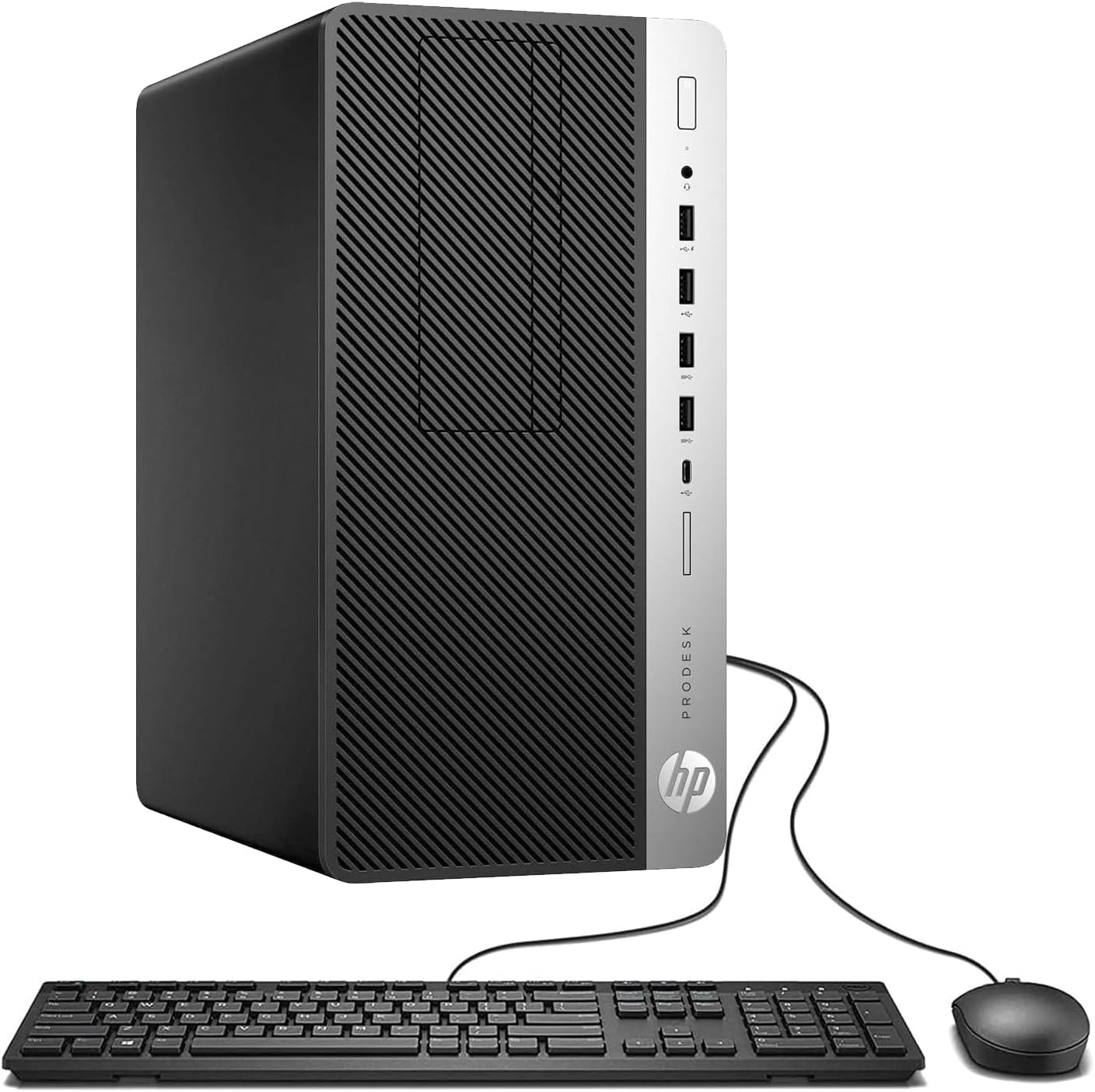
The HP ProDesk 600G4 Tower is a renewed desktop PC tailored for professionals and home users seeking reliable performance without breaking the bank. Equipped with an 8th-gen Intel Core i7-8700 hexa-core processor, 32GB DDR4 RAM, and a 1TB SSD, it excels in multitasking scenarios like running Office 365, Zoom calls, web browsing, and light multimedia editing. This makes it a strong choice for small businesses, remote workers, or anyone needing a dependable workstation.
Standout features include the speedy SSD for instant boot-ups and app loading, integrated WiFi 5G plus Bluetooth for easy wireless setup, and a robust port selection with multiple USB 3.0, Type-C, DisplayPort, and Ethernet options. Real-world performance shines in productivity tasks, with smooth 4K video streaming and efficient handling of tools like Adobe apps or QuickBooks, thanks to the ample RAM and capable i7 CPU paired with Intel HD 630 graphics.
Build quality reflects its business-grade origins, with a sturdy tower chassis offering expansion via internal SATA ports. As a Microsoft Authorized Refurbisher product, it arrives with Windows 11 Pro, rigorously tested for like-new reliability, and backed by free tech support. While the tower form factor demands space and lacks a dedicated GPU for graphics-heavy work, its value for everyday professional use is unmatched.
Overall verdict: A top pick for budget-conscious users wanting pro-level power in a refreshed package. Highly recommended for office setups or home productivity rigs.
Processor: Intel Core i7-8700 (3.4GHz, hexa-core)
RAM: 32GB DDR4
Storage: 1TB SSD (primary), additional SATA expansion available
Graphics: Integrated Intel HD 630
Connectivity: WiFi 5G, Bluetooth, USB 3.0 (x6), USB 2.0 (x4), USB Type-C (x1), DisplayPort (x2), RJ-45 Ethernet
OS: Windows 11 Pro 64-bit
Form Factor: Tower with audio ports and combo jack
Pros
- Powerful CPU handles demanding tasks like video editing and graphic design effortlessly
- Generous expandability for RAM and dual M.2 SSD slots up to 4TB total
- Advanced connectivity including WiFi 6, BT 5.2, and triple 4K outputs
- Integrated AMD Radeon Graphics for smooth 4K visuals and light gaming
- Complete package with HDMI cable, VESA mount, and 1-year warranty
Cons
- Integrated graphics may not suffice for intensive gaming or professional rendering
- One M.2 slot limited to SATA SSD, potentially slowing max storage speeds
- Compact size could lead to thermal throttling under prolonged heavy loads
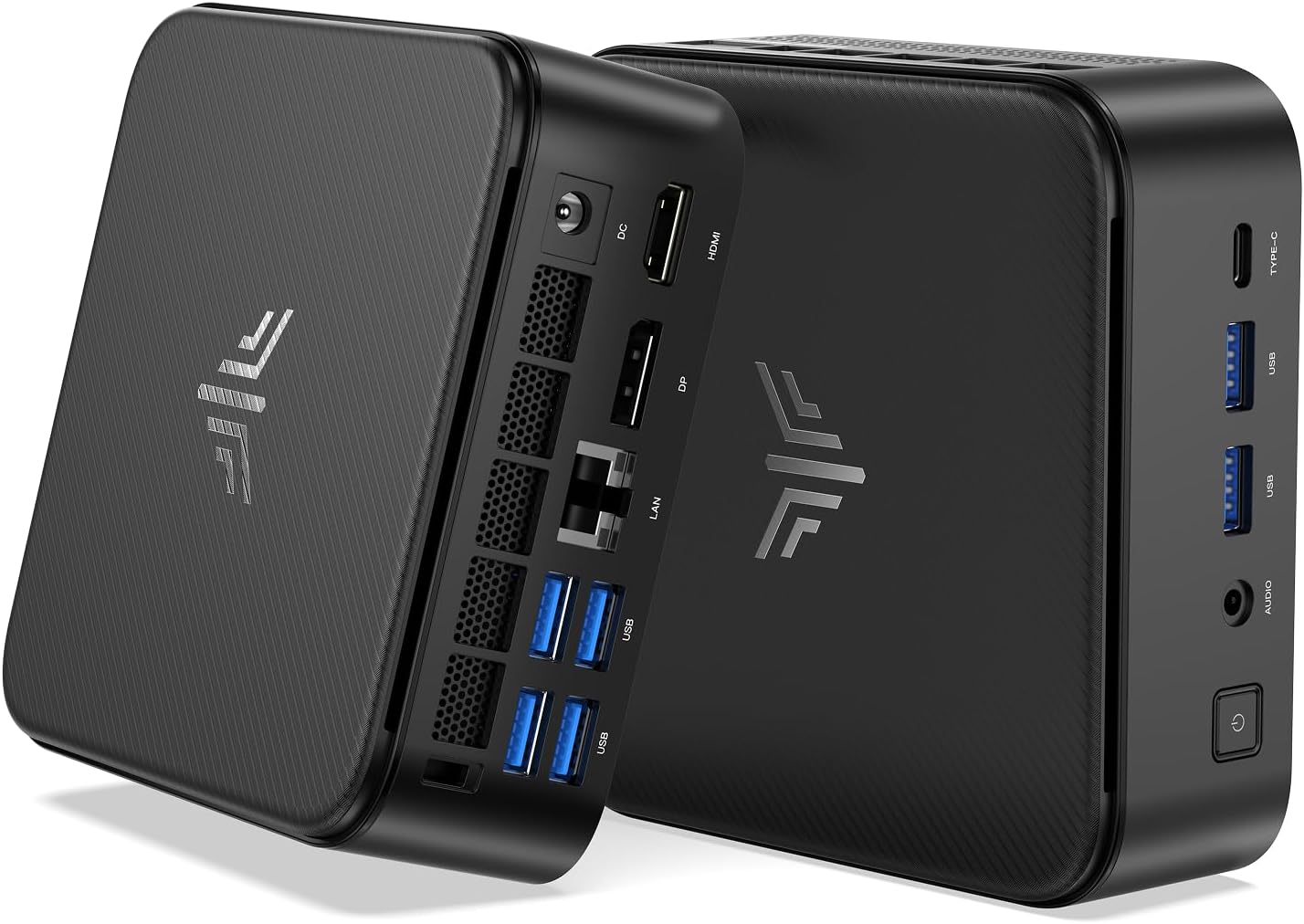
The KAMRUI E3B Mini PC is a powerhouse in a tiny package, ideal for professionals, home offices, and casual gamers seeking a versatile desktop alternative. Featuring the AMD Ryzen Embedded V2748 processor with 8 cores, 16 threads, and speeds up to 4.3GHz, it surpasses models like the Ryzen 5 6650H and Ryzen 7 5825U by 25% in performance, making it perfect for multitasking, office applications, video editing, and graphic design without lag.
Standout features include 16GB dual-channel DDR4 RAM at 3200MHz (expandable to 64GB) and a 512GB M.2 SSD (expandable to 4TB across two slots), ensuring snappy boot times and ample space. The integrated AMD Radeon Graphics with 7 cores supports triple 4K displays via HDMI, DisplayPort, and USB-C, boosting productivity. WiFi 6 offers up to 2400Mbps speeds with low latency, complemented by Bluetooth 5.2 and dual LAN ports for rock-solid connectivity in real-world use like HD streaming or online meetings.
Its ultra-portable build is VESA mountable and includes all essentials for quick setup, emphasizing a green, efficient design. Build quality feels solid for daily use, though the small form factor might warm up during extended heavy tasks.
Drawbacks include graphics limitations for high-end gaming and one SATA-only SSD slot, but for its target audience, these are minor. Overall, the E3B delivers exceptional value for compact power users.
Verdict: Highly recommended for anyone needing a high-performing, space-saving PC that punches above its size.
Processor: AMD Ryzen Embedded V2748 (8C/16T, up to 4.3GHz, 16M Cache)
Graphics: Integrated AMD Radeon Graphics (7 cores, 1600MHz)
RAM: 16GB DDR4 3200MHz (expandable to 64GB)
Storage: 512GB M.2 2280 SSD (expandable to 4TB: 1x NVMe PCIe 3.0/SATA, 1x SATA up to 2TB each)
Display: Triple 4K@60Hz (HDMI + DP + USB-C)
Connectivity: WiFi 6, Bluetooth 5.2, Dual LAN, 3.5mm Audio Jack
OS: Windows 11 Pro
Dimensions: Compact micro form factor with VESA mount

Pros
- Unmatched AI and compute power in a mini form factor
- Massive RAM and storage for heavy multitasking
- Ultra-quiet cooling for prolonged use
- Advanced networking for server applications
- Support for quad 8K displays and fast peripherals
Cons
- High TDP requires robust power setup
- Overkill for basic home or office tasks
- Early product stage with limited user feedback
The Beelink GTR9 Pro is a powerhouse mini PC designed for professionals, AI enthusiasts, gamers, and creators who demand desktop-level performance in a compact chassis. Powered by the AMD Ryzen AI Max+ 395 processor with 16 Zen 5 cores, 126 TOPS NPU, and Radeon 8060S graphics, it excels at running large AI models like DeepSeek 70B locally, video editing, 3D rendering, and AAA gaming without compromise.
Standout features include 128GB LPDDR5X RAM and a 2TB PCIe 4.0 SSD, expandable to 8TB, ensuring seamless handling of massive datasets and multitasking. Dual 10GbE LAN ports enable AI server clustering, while WiFi 7 and dual USB4 support ultra-fast networking and quad 8K display output. Real-world performance shines in demanding scenarios, with 140W cooling keeping noise below 32dB for quiet operation during long sessions.
Build quality impresses with an all-metal chassis, internal aluminum frame, and integrated 230W PSU for durability and a clean setup. The built-in dual speakers and AI-enhanced microphone add value for voice interactions and media consumption. Connectivity options like SD card slot and BT 5.4 round out its versatility.
Drawbacks include its high power draw, which may not suit power-conscious users, and it being overpowered for everyday browsing or light office work. Early adoption means fewer long-term reliability insights.
Verdict: A top-tier choice for advanced users needing an AI-ready mini workstation. If you prioritize raw power and future-proofing in a small package, the GTR9 Pro delivers exceptional value.
CPU: AMD Ryzen AI Max+ 395 (16C/32T, up to 5.1GHz, 80MB Cache)
GPU: AMD Radeon 8060S (2.9GHz)
NPU: 126 TOPS
RAM: 128GB LPDDR5X 8000MT/s
Storage: 2TB PCIe 4.0x4 SSD (dual M.2 slots, up to 8TB)
Networking: Dual 10GbE LAN, WiFi 7, BT 5.4
Displays: HDMI 2.1, DP 2.1, 2x USB4 (Quad 8K@60Hz)
Other: Built-in 230W PSU, Dual speakers, AI microphone, SD slot
Best Cpus For Photo Editing Buying Guide
Core Counts and Threading for Editing Workloads
For photo editing, prioritize CPUs with high core and thread counts to handle multi-threaded tasks like exporting large RAW files or applying filters across batches. According to Puget Systems benchmarks, 16+ cores excel in Adobe apps, reducing export times by up to 50% compared to lower-end options. In daily use, this means faster iterations without compromising on single-thread performance for brush tools.
Consider your workflow: hobbyists can thrive with hexa-core CPUs, while pros need 24-core beasts for 8K edits. Pair with ample RAM for seamless multitasking. Explore related picks in our Gaming PCs section for hybrid setups.
Clock Speeds, Cache, and Power Efficiency
High clock speeds (4.5GHz+) and large L3 cache accelerate single-threaded operations like noise reduction or cloning in Photoshop. Tom’s Hardware reviews highlight how Intel’s hybrid architecture or AMD’s Zen 5 delivers 20-30% better responsiveness in creative suites versus older gens. Efficiency matters too, keeping systems cool during long sessions.
| Feature | Photo Editing Priority | Example Benefit |
| Base Clock | 3.5GHz+ | Quick previews |
| Turbo Boost | 5GHz+ | Fast renders |
| L3 Cache | 30MB+ | Smooth scrubbing |
Platform Compatibility and Longevity
Opt for modern sockets like LGA 1700 or AM5 for upgrade paths and DDR5 support, ensuring your CPU investment lasts. AnandTech notes strong compatibility with Adobe’s latest updates, plus integrated GPUs for light GPU-accelerated effects. This future-proofs your rig for AI tools like generative fill.
Check connectivity: PCIe 5.0 for fast SSDs storing massive libraries. Link to our Computers hub for full system recommendations.
Final Thoughts
The Dell XPS 8960 with Intel Core i9-14900K stands out as Best Overall for its 24-core dominance in heavy edits, while the HP ProDesk 600G4 i7-8700 offers unbeatable value for mid-tier workflows, and the KAMRUI Ryzen mini PC wins for compact daily use. HP ProDesk 600G4 Tower Desktop Computer delivers reliable multitasking at a fraction of premium costs. Elevate your edits today—pick one and transform your productivity. See more in our Desktops & Monitors guide.
FAQs
What makes a CPU ideal for best cpus for photo editing in 2026?
Look for high single-core speeds for Photoshop and multi-core prowess for Lightroom exports. Our recommendations balance these with efficient power draw for sustained sessions. Upgrade now for workflows that match your vision.
Intel vs. AMD for photo editing?
Intel edges in single-thread Adobe tasks per Puget Systems data, while AMD shines in multi-thread value. Both excel in our best cpus for photo editing—choose based on software and budget. Check internal links for hybrid builds.
Do I need a discrete GPU with these best cpus for photo editing?
Not always; strong integrated graphics handle most edits, but pair with a GPU for AI features. Our picks support easy upgrades for evolving needs.
How much RAM pairs best with best cpus for photo editing?
32GB minimum for smooth 4K+ editing; 64GB for pros. These CPUs thrive with fast DDR5 kits.
Are mini PCs viable for best cpus for photo editing?
Yes, compact options like our Ryzen picks deliver surprising power for portable editing. Grab one to declutter your space today. Explore best monitors for video editing to complete your station.
Sources
This article was researched and written with reference to expert reviews and testing data from trusted sources including Puget Systems, AnandTech, Tom’s Hardware, TechPowerUp, and CNET. All recommendations reflect real-world performance and value as of October 2026.







Write Your Review
No reviews yet. Be the first to share your experience!